
If you are researching a transformative safari in Tanzania, you will have already encountered the number eleven. It appears in studies from Columbia University, from the University of Utah, from longitudinal research tracking participants through extended wilderness immersion programmes and following them for months afterward. It keeps appearing for the same reason: eleven days is where the data changes.
Research confirms that a transformative safari Tanzania 11 days in length does something structurally different from a shorter trip.
Below this threshold, the improvements are real but temporary. Above it, the research stops documenting physiological relief and starts documenting something more significant: lasting behavioural change. Durable shifts in how the brain responds to stress, processes creative problems, and regulates emotional response.
Most safari itineraries are six days. Most wellness retreats are four. Most people return from these experiences feeling better, assume the feeling will last, and discover — within a fortnight — that it does not. The biology was never given enough time.
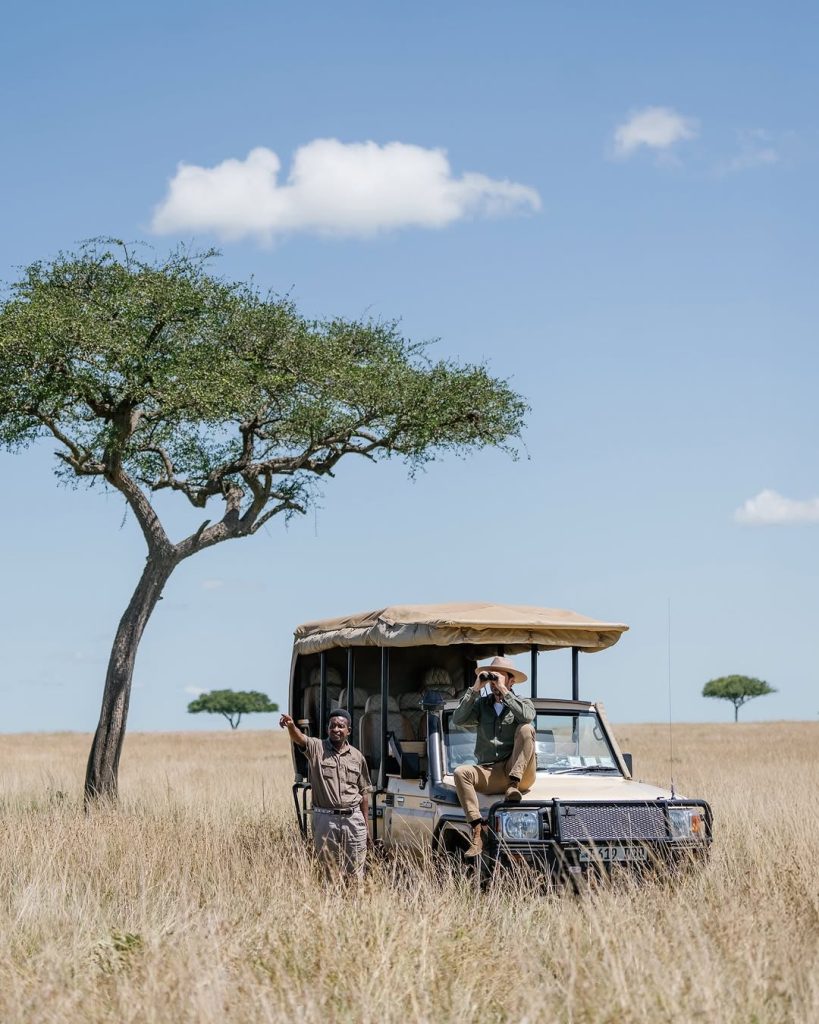
This post is about what eleven days actually does. And why the number is not arbitrary.
The Difference Between Relief and Reset
Before getting to the threshold itself, it helps to understand the distinction it marks.
Short-term nature exposure — a weekend in the countryside, a three-day mountain retreat, even a four-day safari — produces measurable, genuine improvements in physiological markers. Cortisol drops. Blood pressure falls. Self-reported stress declines.
These effects are real and they are documented across hundreds of studies. Going into nature, even briefly, is always better than not going.
But the mechanism behind short-term relief is different from the mechanism behind lasting change.
Short-term exposure works primarily through the autonomic nervous system. Remove a person from the stressor environment, place them in a low-threat natural setting, and the sympathetic nervous system begins to downregulate. Heart rate slows. Breathing deepens.
Cortisol declines. This is genuine recovery — in the sense that a night’s sleep is genuine recovery. Necessary, real, and entirely reversible upon re-exposure to the original conditions.
Lasting change requires neurological reorganisation. The formation of new attentional habits. The sustained deactivation of hypervigilance pathways long enough for the brain to stop treating them as the default.
These processes take time. Specifically, they take approximately eleven days — which is exactly why a transformative safari Tanzania 11 days in length produces outcomes that shorter formats cannot.
What Research Shows a Transformative Safari Tanzania 11 Days Delivers
The most directly relevant research is a series of longitudinal studies conducted at Columbia University’s Lab for Scalable Mental Health. Researchers tracked participants through extended wilderness immersion programmes of varying durations — ranging from three days to sixteen — measuring outcomes at intervals of one week, one month, and three months post-experience.
The findings established a clear threshold.
Participants completing immersions of ten days or fewer showed meaningful short-term improvement across all measured markers — stress, anxiety, cognitive flexibility, emotional regulation — with effects that diminished substantially within two to three weeks of returning to their normal environment. The recovery, however genuine, did not hold.
Participants completing eleven days or more showed a different pattern. Improvements were marginally smaller at the immediate post-immersion measurement — the difference between ten days and eleven in the acute phase is not dramatic.
But the three-month follow-up told a different story. The eleven-day cohort retained statistically significant improvements across all markers at three months. The ten-day cohort did not.
The proposed mechanism is the completion of a full cycle of attentional restoration — the process by which the brain’s directed attention systems fully recover from fatigue, allowing the involuntary attentional systems to rebuild suppressed neural pathways.
This cycle, in a genuine wilderness environment, requires a minimum of eleven days to complete. Below that threshold, the cycle is interrupted by the return to the urban environment before it can consolidate.
Eleven days is not a round number chosen for convenience. It is the point at which the data changes.
The Transformative Tanzania Safari Day by Day: What 11 Days Does
Understanding the threshold is more useful when it is mapped against what is actually occurring during a Tanzania wilderness immersion of this length.
This is a generalised pattern — individual experience varies — but it is consistent enough across departures to be worth describing in sequence.
Days 1–2: Decompression
The nervous system is still running its urban calibration. Most guests describe a quality of restlessness in the first forty-eight hours — a reaching for the phone, an awareness of silence that reads initially as absence rather than presence.
The body is present in the bush. The nervous system is still in the office. This is normal. It is the system beginning to scan for the threat that is no longer there.
Days 3–4: The first loosening
Cortisol begins its measurable decline. Guests report better sleep — not the medicated, effortful sleep of the depleted urban worker, but the early, deep, uninterrupted sleep of a body that has been physically engaged outdoors and is not being pulled back to wakefulness by ambient digital anxiety.
Morning game drives begin to produce something closer to genuine absorption rather than engaged tourism. The landscape starts to feel less like a backdrop and more like the actual environment.
Days 5–7: Proprioceptive engagement
Walking in the bush — on uneven ground, reading animal tracks, moving at the pace dictated by the terrain rather than a schedule — reactivates proprioceptive systems that desk-based life suppresses.
This physical reengagement has downstream cognitive effects: improved spatial awareness, heightened sensory acuity, and the particular quality of mental clarity that comes from a body that can feel itself in the environment it is moving through.
Days 8–9: The default mode network returns
This is the phase that most guests cannot articulate until they are in it. The brain’s default mode network — the system responsible for self-reflection, creative synthesis, and the kind of thinking that cannot be forced — begins to fully activate. Thoughts arrive without effort.
Problems that felt intractable become approachable. There is a quality of inner spaciousness that feels unfamiliar precisely because it has been absent for so long.
Days 10–11: Consolidation
The neurological changes of the preceding days are not yet durable. This final phase is what makes them so. The brain, given time to operate in this restored state without interruption, begins to consolidate the new attentional patterns.
The hypervigilance pathways, having been deactivated consistently for long enough, lose their status as the default response.
What replaces them — measured, present, genuinely receptive attention — begins to feel like the natural state rather than an unusual one.
This is the threshold. This is what eleven days buys that ten does not.
Why Most Itineraries Are Designed Against This
The conventional safari itinerary is, at its core, a logistics product. It is optimised for maximum variety across minimum time: three parks in seven days, two nights at each location, a different lodge every other morning.
This design is not malicious. It reflects what most operators assume people want — the greatest number of distinct experiences in the fewest possible days. And for a holiday conceived as entertainment, it is a reasonable framework.
But for a journey conceived as restoration, it is precisely the wrong structure. Moving every two days — packing, unpacking, orienting to a new camp, a new guide, a new acoustic environment — keeps the nervous system in a mild but consistent state of stimulation.
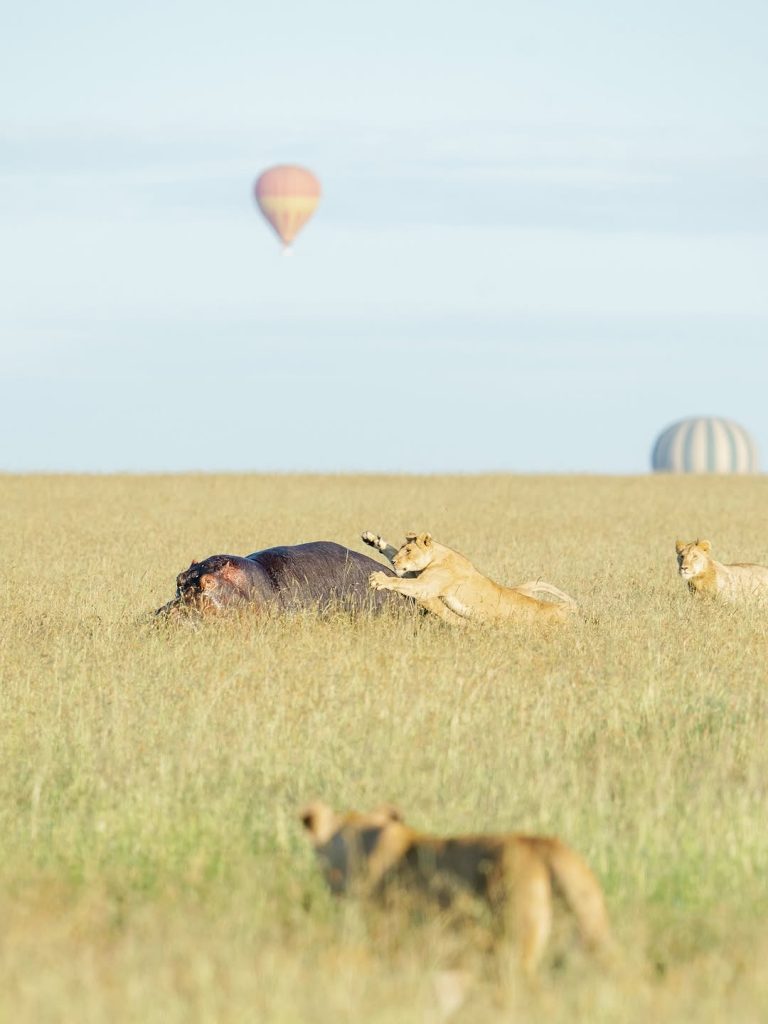
It prevents the deepening that genuine recovery requires. You never fully arrive anywhere, because by the time you do, you are already packing to leave.
East Africa Safari Guides’ group departures are built around extended stays at fewer locations. Three nights minimum at each property. Often four. Sometimes longer.
This is not a budget decision. It is a neurological one. The research is consistent on this point: depth of stay produces better restoration outcomes than breadth of location, even when the locations are of equivalent quality.
The Serengeti does not reveal itself on the first morning. It reveals itself over a series of mornings, each one slightly different from the last, as the landscape becomes familiar enough to be read rather than merely observed.
Why Tanzania Is the Right Environment for an 11-Day Transformative Safari
Why Tanzania, rather than any other wilderness of equivalent scale?
The honest answer is that several wilderness environments can produce the neurological effects described above, given sufficient duration. The Amazon, the Himalayas, the Okavango — all of them are complex enough to engage involuntary attention at the depth the research requires.
Tanzania’s specific advantages are ecological and logistical in roughly equal measure.
Ecologically: the Serengeti ecosystem is one of the few remaining large-mammal habitats on earth where the predator-prey dynamics, the migratory patterns, and the population densities are operating at something close to their pre-colonial equilibrium.
This produces a quality of wildlife encounter that is not replicated in smaller, more managed reserves. The unpredictability — the benign uncertainty about what is around the next corner — is genuine rather than curated.
The seasonal variation is also significant. The November departures coincide with the short rains and the emergence of new grass — the landscape transforming daily, the bird migration at its peak, the atmosphere carrying a quality of renewal that guests consistently describe as affecting in ways they did not anticipate.
The June departures sit in the Great Migration window — two million animals moving through the ecosystem in one of the most biologically extraordinary events on earth.
Logistically: Tanzania’s northern circuit can be navigated by light aircraft between destinations, which means the extended stays described above do not require long overland transfers.
You arrive at each property rested. The transition between locations is a thirty-minute flight rather than a four-hour drive. The safari itself begins at the airstrip.
The Question of Whether You Can Afford Eleven Days
It is worth addressing directly, because it is the objection that sits underneath the hesitation most people feel when they look at an eleven-day itinerary.
The question is usually framed as a time question. In practice, it is often a permission question.
Eleven days away from work, from family, from the particular web of obligation and expectation that constitutes the modern professional life, requires a quality of self-authorisation that four days does not.
Four days is a long weekend. Eleven days is a statement about what you consider important enough to protect from the demands of everything else.
The research on the cost of not recovering is consistent and increasingly well-documented: sustained cognitive depletion reduces productivity at a rate that eventually costs more — in measurable output terms — than the time required to genuinely recover.
This is not a wellness industry claim. It is an operational one, backed by Harvard Business Review research on executive performance, Stanford studies on decision fatigue, and a considerable body of organisational psychology literature.
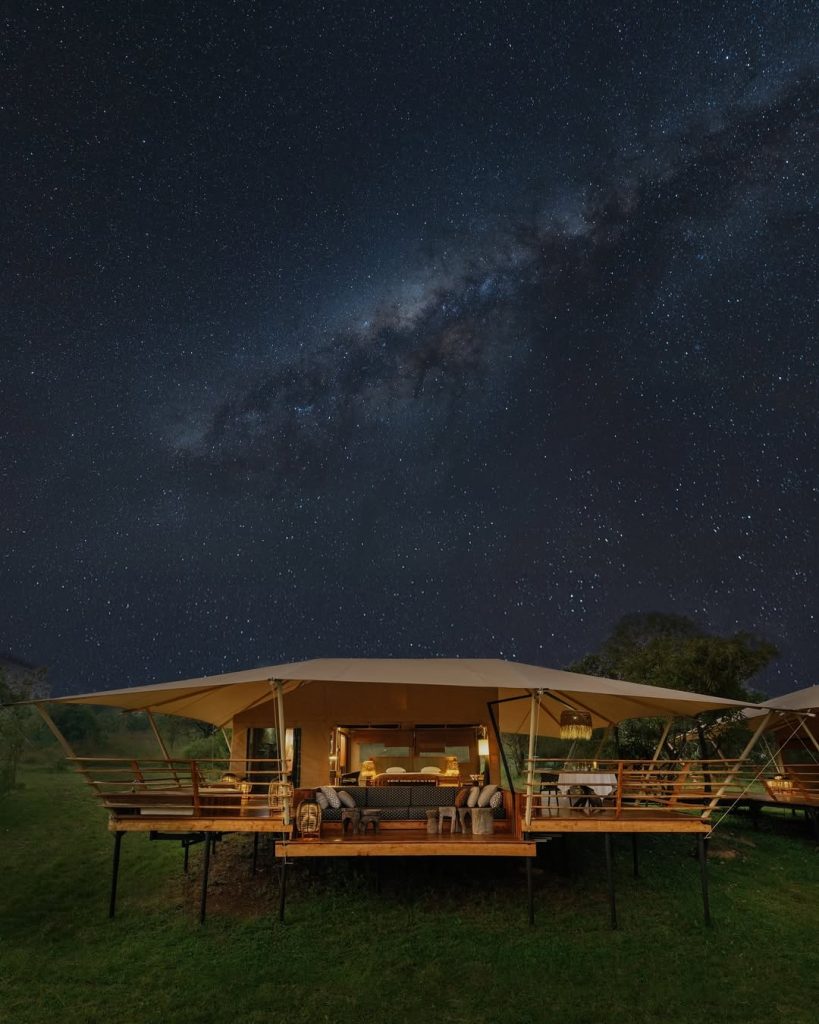
You are not taking eleven days away from your life. You are protecting the cognitive infrastructure that your life depends on.
Our Transformative Safari Tanzania 11-Day Departures
Every East Africa Safari Guides group departure runs for a minimum of eleven days. This is not coincidence. The itineraries were designed around the research.
All-Women Departures — Maximum 6 guests:
- 10–22 November 2026 — 13 Days
- 20 June–2 July 2027 — 13 Days
- 10–22 November 2027 — 13 Days
Mixed Group Departures — Maximum 6 guests:
- 5–15 December 2026 — 11 Days
- 5–16 June 2027 — 12 Days
- 5–15 December 2027 — 11 Days
If you are deciding between the all-women and mixed group format: All-Women Safari vs. Mixed Group Travel: How to Know Which One Is Actually Right for You.
If you are travelling alone and the group format is still an open question: The Questions Solo Travellers Ask Before Booking a Group Safari — Answered Without a Script.
To discuss which departure fits where you are, Connect with our Travel Specialist beleow