Most travel companies answer the solo traveller’s concern with a variation of the same sentence. It usually contains the words warm, welcoming community and ends with something about lifelong friendships. It is, in almost every case, designed to close the conversation rather than continue it.
We are going to try something different.
The questions solo travellers ask before committing to a group departure are not irrational. They are not expressions of social anxiety or excessive caution.
They are the questions of someone who has spent years learning, through experience, the difference between travel that looks good on paper and travel that actually delivers what it promises.
You have earned the right to ask them directly. These are the honest answers.
What is the group dynamic actually like? And how can I know in advance?
You cannot know with certainty. That is the true answer, and any operator who tells you otherwise is either lying or has never actually paid attention to their own groups.
What you can know is the conditions under which the dynamic is likely to be good — and whether those conditions are structurally built into the product or left to chance.
On East Africa Safari Guides departures, the group is capped at six on mixed departures and six on all-women departures. These are not marketing numbers. They are the maximum beyond which the social chemistry becomes unmanageable and the private vehicle advantage disappears.
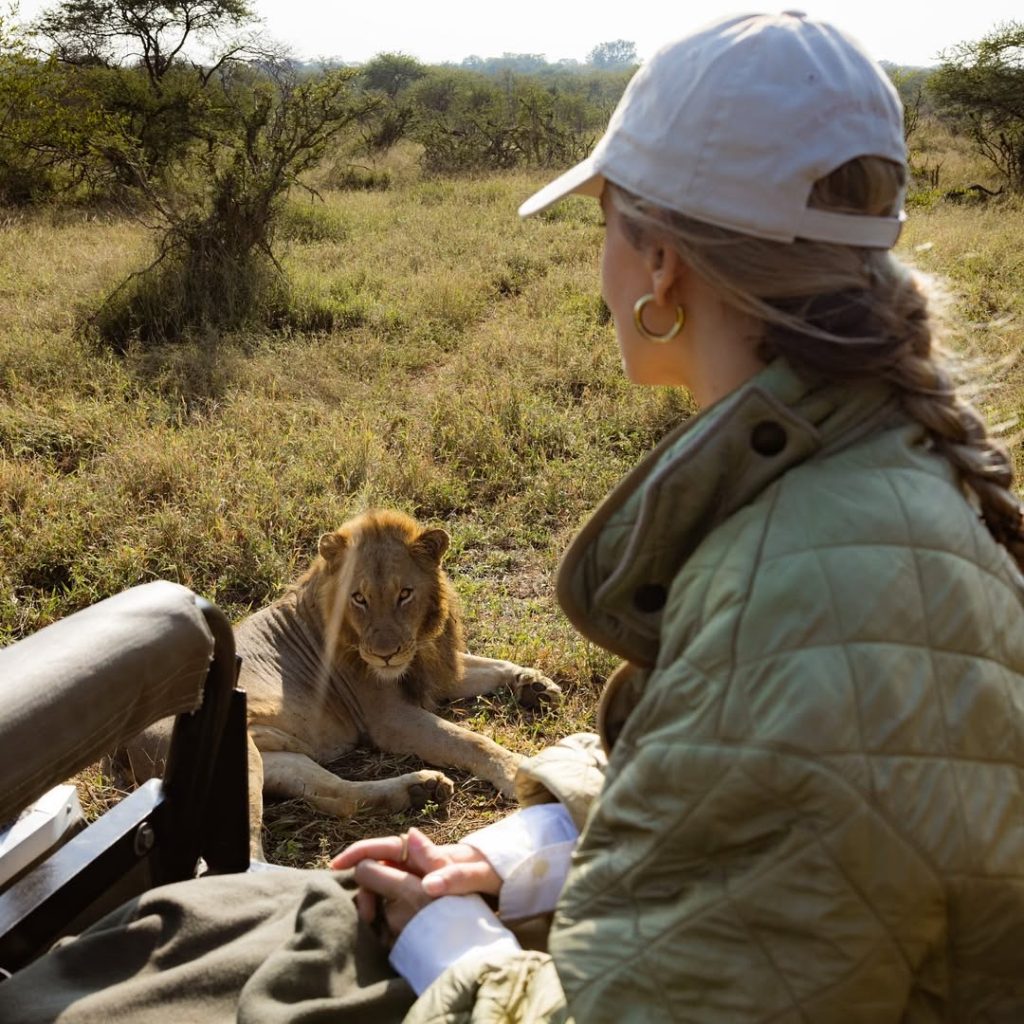
At six people in a landscape the size of the Serengeti, the group is never large enough to feel like a group in the institutional sense. It is simply a small number of people who have made a similar decision.
The second structural factor is the guide. A senior guide with 15 to 30 years of field experience is, among other things, a social architect. They understand pace.
They know when to let a morning game drive run long and when to call it. They know which silences are comfortable and which are not.
They do not force conversation, but they do create conditions in which conversation can emerge naturally — over a sighting, over a meal, over the particular quality of an African evening that makes it genuinely difficult to keep your thoughts to yourself.
The third factor is the pre-departure channel. Every guest is added to a private group channel before the journey begins. Not to manufacture familiarity, but to allow the first meeting at Kilimanjaro to feel like a reunion rather than an interview.
By the time you land, you already know something about the people you are about to travel with. The awkward early hours — the ones that make solo travellers most nervous — are significantly softened by the time you arrive.
None of this guarantees chemistry. But it builds the architecture within which chemistry is far more likely than not.
What if I need silence and the rest of the group is chatty?
This question reveals something important about who tends to ask it.
The solo travellers who worry about this are almost always the ones who are least likely to cause the problem they are worried about. People who are drawn to silence are, by and large, people who understand its value for others as well as themselves.
The guest who cannot stop talking on a game drive is rarely the guest who spent three weeks weighing the decision to book.
That said, the concern is legitimate and the answer is practical.
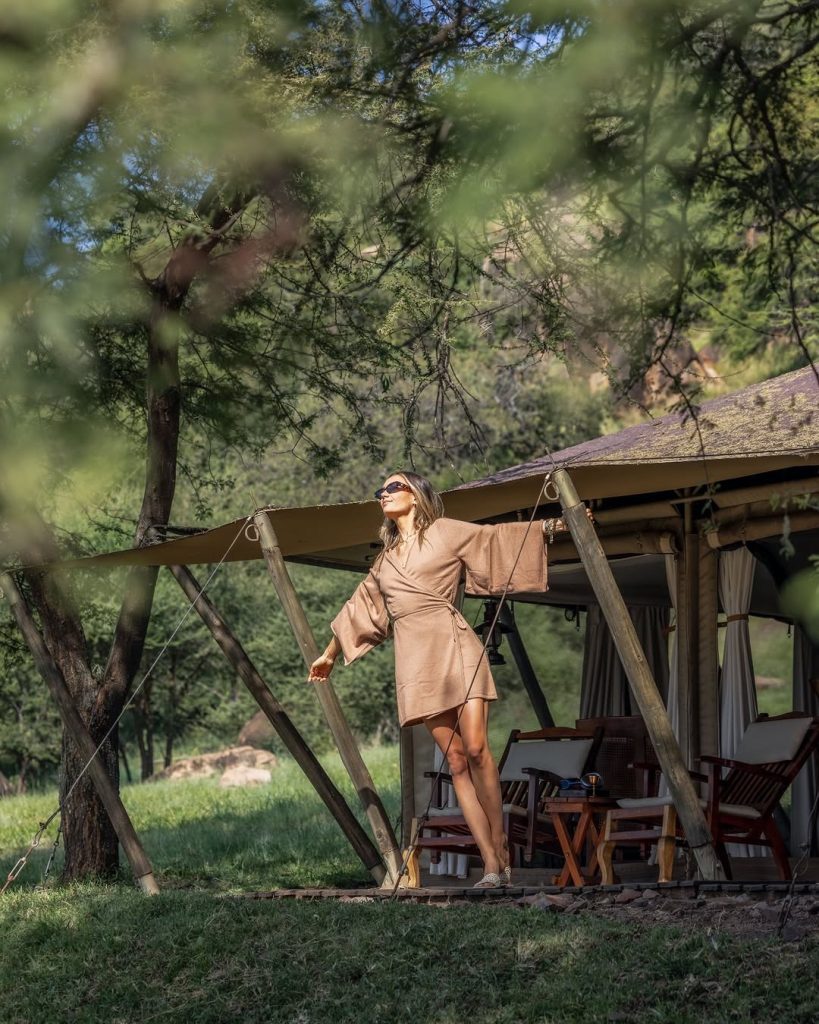
Private tents at every lodge on our itineraries are spaced to provide genuine separation — not the nominal fifty metres of a crowded camp, but the kind of distance that means your evening can be yours if you want it to be. The vehicle has natural quiet zones.
Morning game drives, particularly in the pre-dawn hours when the light is low and the grass is still cold, tend to produce an ambient hush that most guests fall into without instruction. The bush itself is a significant regulator of social noise.
The more useful thing to say is this: the kind of person who books these departures is not, as a rule, the kind of person who fills silence reflexively.
They are people who chose Tanzania over a resort holiday. Who chose a group experience over a fully private itinerary.
Who are, at some level, looking for depth rather than distraction. The self-selection process that produces our groups is doing meaningful work before anyone sets foot on a plane.
We have never had a complaint about excessive group noise. We have, on multiple occasions, had guests tell us they were surprised by how naturally quiet the group was — and how unexpectedly good that felt.
What if the people are simply wrong for me?
This is the fear underneath all the other fears, and it is worth addressing without euphemism.
You are committing days, money, and the particular vulnerability of travel to a group of people you have not met. If it goes badly — if the group is incompatible in some fundamental way — there is no clean exit. You are in the Tanzanian bush. You cannot simply go home.
Here is what we can say honestly.
In four years of group departures, we have not had a departure that broke down socially. This is not because every group has been uniformly compatible — it is because the shared context of genuine wilderness is a remarkable social leveller.
People who would have nothing to say to each other at a dinner party in London find themselves deep in conversation by day two in Tarangire, because the landscape has stripped away the social scaffolding under which incompatibility usually hides.
Status, profession, lifestyle — none of it means anything to a leopard. And groups of people who have experienced that specific levelling together tend to be more generous with each other than they would otherwise be.
The other honest answer is that six people in a private vehicle in the Serengeti is not six people trapped in a room. There is always the vehicle window. There is always the vastness of the plains. If someone in the group grates on you, the landscape will, reliably and daily, give you something better to look at.
We will not tell you the people will be perfect. We will tell you the context makes imperfection considerably easier to absorb.
Will I pay more for travelling alone?
No. There is no single supplement on any East Africa Safari Guides group departure.
You pay the same price as every other guest in the group. The logistics are arranged accordingly. Your tent is your own. The experience is not diminished by the absence of a travel companion, and the price does not reflect an absence we consider penalising.
This is worth stating plainly because the single supplement is one of the more nakedly punitive conventions in the travel industry. It charges people for a social situation they did not choose. We have never applied it, and we do not intend to start.
How do I know what level of fitness or experience the group will have?
Each departure listing details the physical requirements clearly. These are not approximations. They are the honest parameters within which the itinerary operates — informed by the specific terrain, the walking distances involved, and the pace of the game drives.
On all departures, game drives are conducted from private 4×4 vehicles. Walking safari components exist on certain itineraries and are detailed per departure.
No prior safari experience is required or assumed. The guide calibrates the experience to the group — not to an imagined guest who has been on twelve previous safaris and knows exactly when to raise their camera.
What you will find is that the group, broadly, shares a physical register. The self-selection process does this work again.
People who book eleven or twelve days in the Tanzanian bush are not, as a rule, people who struggle with early mornings or cannot manage a thirty-minute bush walk.
They are people with enough genuine appetite for the experience to have committed to it seriously.
What does ‘group travel’ actually mean on these departures? Be specific.
Fair request. Here is the specific version.
You fly to Kilimanjaro International Airport. You are met by your guide and transferred privately to your first lodge — not on a shuttle with other groups, not on a shared airport vehicle, but in a dedicated vehicle arranged specifically for your departure.
At the lodge, you have your own tent or suite. You share meals with the group, which on most evenings means a table at the main lodge dining area or a bush dinner set up by the camp team.
You share game drives in a private vehicle — a full-size 4×4 with roof hatches, configured to give every guest an unobstructed view and adequate space. The vehicle does not stop at the same sightings as other camps’ vehicles. Your guide navigates independently.
You do not share a room, a bathroom, or any personal space with any other guest unless you have booked as a pair. Your mornings and evenings are your own to structure. The group comes together around the fixed points of the day — game drives, meals, the fire at the end of the evening — and disperses around everything else.
The word group in this context means a shared vehicle and a shared table. It does not mean a shared itinerary in the sense of a package tour.
The guide responds to the group’s collective interest on each drive, which means that if one out of six guests want to spend an extra hour watching a cheetah hunt, the vehicle stays.
This is one of the more significant practical advantages of a small, aligned group over a fully solo itinerary: the collective attention of a group of genuinely curious people tends to surface sightings and moments that a single traveller, however observant, would miss.
The Larger Question Underneath All of These
There is, underneath the practical questions, a more philosophical one that most solo travellers are carrying but rarely ask directly.
It is some version of: Is this going to be mine?
Will the experience belong to me, genuinely, or will it be mediated and diluted by the fact that I am sharing it with people I didn’t choose?
The honest answer is that the Tanzanian bush has a way of making everything feel personal that is difficult to explain in advance and impossible to deny once you have experienced it.
A lion walking past your vehicle does not walk past the group. It walks past you. The Serengeti at five in the morning does not feel like a shared experience. It feels like a private one that you happen to be having at the same time as five other people.
The solo traveller’s instinct — to protect the quality of their experience by controlling its conditions — is a reasonable one. But the conditions that produce the deepest experiences in the African bush are not the conditions of privacy.
They are the conditions of genuine presence. And genuine presence is, if anything, slightly easier to achieve in the easy companionship of a small, well-chosen group than it is in the echo chamber of a fully solo journey.
This is not an argument for group travel over solo travel. It is simply an observation, drawn from watching a significant number of solo travellers arrive with their defences carefully arranged and leave wondering why they waited so long.
If the All-Women Format Is a Better Fit
Some solo travellers — particularly women travelling alone — find that the mixed group format addresses most of their concerns, but the all-women departure addresses all of them. If you are still working through which format is right for you, the direct comparison is covered in full here:All-Women Safari vs. Mixed Group Travel: How to Know Which One Is Actually Right for You.
Available 2026 and 2027 Group Departures
Mixed Group — Maximum 6 guests
- 5–15 December 2026 · Northern Circuit.
- 5–16 June 2027 · Northern Circuit with Migration.
- 5–15 December 2027 · Northern Circuit.
All-Women — Maximum 6 guests
- 10–22 November 2026 · Arusha, Tarangire, Serengeti, Zanzibar.
- 20 June–2 July 2027 · Arusha, Tarangire, Ngorongoro, Zanzibar.
- 10–22 November 2027 · Arusha, Tarangire, Serengeti, Zanzibar.
If you have a question that is not covered here — about a specific departure, about the physical requirements, about what happens if your travel plans change. We will answer it without a script.
The conversation has begun.
Your details have reached us. We are already considering your journey.
Expect a response before the day is out — precise, personal, and worth the wait.