There is a question about all women safari Tanzania group travel we receive more than almost any other. It arrives in emails that are carefully worded, from women who are clearly intelligent, clearly decisive in every other area of their lives, and clearly reluctant to admit that the format of the journey matters to them as much as the journey itself.
The question, in its various forms, is always a version of the same thing: Will I feel different on an all-women departure than I would on a mixed group? And if so — does that make me someone who needs the all-women version, or someone who doesn’t?
It is a more layered question than it sounds. And it deserves a more honest answer than most safari companies give it.
So here is ours.
The Honest Premise: Both Options Are Equally Good. They Are Not Equally Right for Everyone.
Let us be direct about something first.
On every East Africa Safari Guides departure — all-women or mixed group — the guide has between 15 and 30 years of field experience in Tanzania specifically. The vehicle is private and unshared with any other group. The lodges are selected for their proximity to wildlife, their quality of food, their wellness infrastructure, and their stillness. The itinerary is built around depth of experience, not volume of sightings.
The standard does not change based on who is in the vehicle.
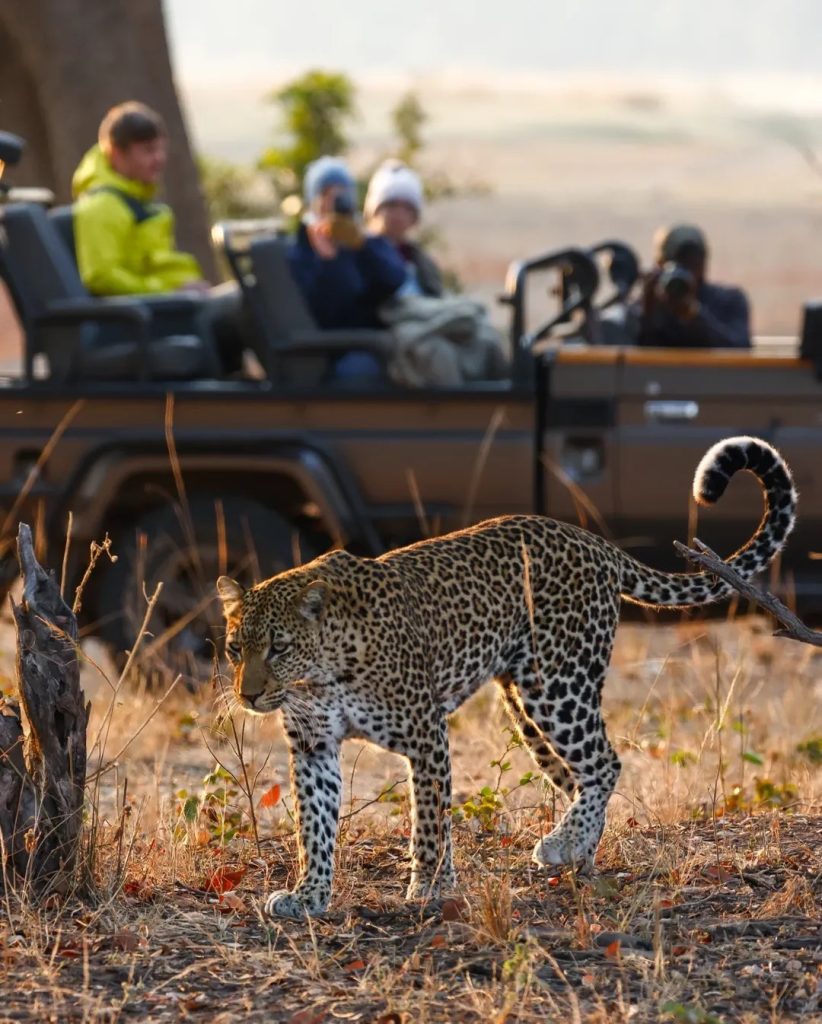
What changes is the social environment you move through for the duration of the journey. And for a significant number of women, that environment is not a peripheral detail. It is the condition under which everything else becomes possible.
Understanding which category you fall into is not a question of confidence, independence, or strength. It is a question of honest self-knowledge. The two are not the same thing, and conflating them is one of the more unhelpful habits modern travel marketing has developed.
What an All-Women Departure Actually Feels Like?
The easiest way to describe it is this: something is removed.
Not something bad. Not something you would have resented in a mixed group. Just — a layer. A low-level ambient awareness that most women carry so constantly they have stopped noticing it.
The awareness of being observed. Of taking up the right amount of space. Of not being the loudest or the quietest. Of performing competence in front of people who may or may not be cataloguing it.
In a vehicle of six women in the Tanzanian bush at five in the morning, watching a lioness settle her cubs in the long grass forty metres away, that layer is simply gone.
What tends to replace it — and this is consistent across departures, across ages, across nationalities — is a quality of attention that many of our guests describe as unfamiliar. Not manufactured. Not the result of any particular activity. Just the natural consequence of not spending any part of your awareness managing how you are being perceived.
The conversations that emerge from this tend to be different too. Not more profound by design. But less edited. Women who have not spoken to each other before arriving at Kilimanjaro will, by the third evening around a fire, be discussing things they do not discuss at home.
This is not a group therapy dynamic — there is no facilitated sharing, no structured reflection. It is simply what happens when intelligent, self-aware people are removed from the contexts in which they perform their usual roles and placed in a landscape that has no interest in those roles whatsoever.
The Serengeti is entirely indifferent to your job title. This turns out to be enormously useful
What a Mixed Group Departure Actually Feels Like?
Mixed group departures attract a specific kind of traveller. Not a different quality of traveller — a different orientation.
These are, broadly, people who arrive without needing the journey to be anything in particular. They are curious rather than seeking.
They want excellent wildlife, excellent food, exceptional guiding, and the easy companionship of people who have made a similar decision to step outside the ordinary for eleven or twelve days.
They are not running from anything. They are simply running toward something that most of their social circle has not yet thought to pursue.
The dynamic on these departures tends to be lighter in register. Conversations range across everything — work, sport, politics, the improbable behaviour of the animal that just walked past the vehicle — without the kind of deliberate depth that characterises the all-women experience. This is not shallowness. It is a different mode of connection, and for many people it is precisely what they came for.
The social ease of a well-composed mixed group is real. When the chemistry is right — and our capping at twelve guests is specifically designed to make it manageable — these journeys produce friendships that are genuinely durable.
The shared context of having watched a river crossing from a private vantage point, or of having sat in silence while an elephant walked within arm’s reach of the vehicle, creates the kind of common ground that normal social environments take years to build.
The Four Questions Worth Actually Asking Yourself
Rather than attempting to prescribe a formula, we find it more useful to offer four questions that tend to clarify the decision quickly.
1. What does my social energy look like at home right now?
If you are someone who spends the majority of your waking hours managing other people’s needs — professionally, domestically, or both — the all-women departure offers an environment where that management instinct has nowhere useful to go. The landscape absorbs it. The group does not require it. For many women in this position, that specific form of relief is what makes the journey transformative rather than simply enjoyable.
If your social energy is reasonably intact and you are travelling primarily out of curiosity and appetite for the wild, the mixed group may serve you better. The lighter social register matches a lighter internal need.
2. Am I looking to be seen, or to be released from being seen?
Both are legitimate. Neither is the more evolved option.
Some women arrive at a point in their lives where being witnessed — being in a space where their experience is genuinely understood by people who share a common frame of reference — is exactly what is missing. The all-women format provides this without asking for it explicitly.
Others arrive wanting to disappear into the landscape entirely, using the group purely as comfortable social infrastructure while they pursue their own internal journey. The mixed format accommodates this equally well.
3. Does the absence of men change anything for me, practically or emotionally?
For some women, the honest answer is no. They have worked in mixed environments their entire careers, their closest friendships are mixed, and the idea of a single-gender group feels more limiting than liberating.
For others — and this is more common than it is spoken about openly — there is a specific quality of ease that comes with the absence of mixed-gender social dynamics. Not because men are unwelcome in their lives, but because the dynamics themselves require energy. Energy that, on a restorative journey, they would prefer to spend on something else.
Neither answer is more sophisticated than the other. Both are worth knowing before you book.
4. Am I travelling to restore something, or to add something?
Restoration and addition are different travel motivations and they suit different social environments. If you are arriving depleted — from work, from grief, from a period of sustained high performance that has quietly hollowed you out — the all-women format tends to offer a more protected space for that particular kind of recovery. The group dynamic is gentler by nature. The pace of connection is patient.
If you are arriving with energy to burn and a genuine appetite for new experience and new people, the mixed group matches that orientation precisely.
A Note on Who Actually Books Each Format
83% of guests across both departure formats book alone.
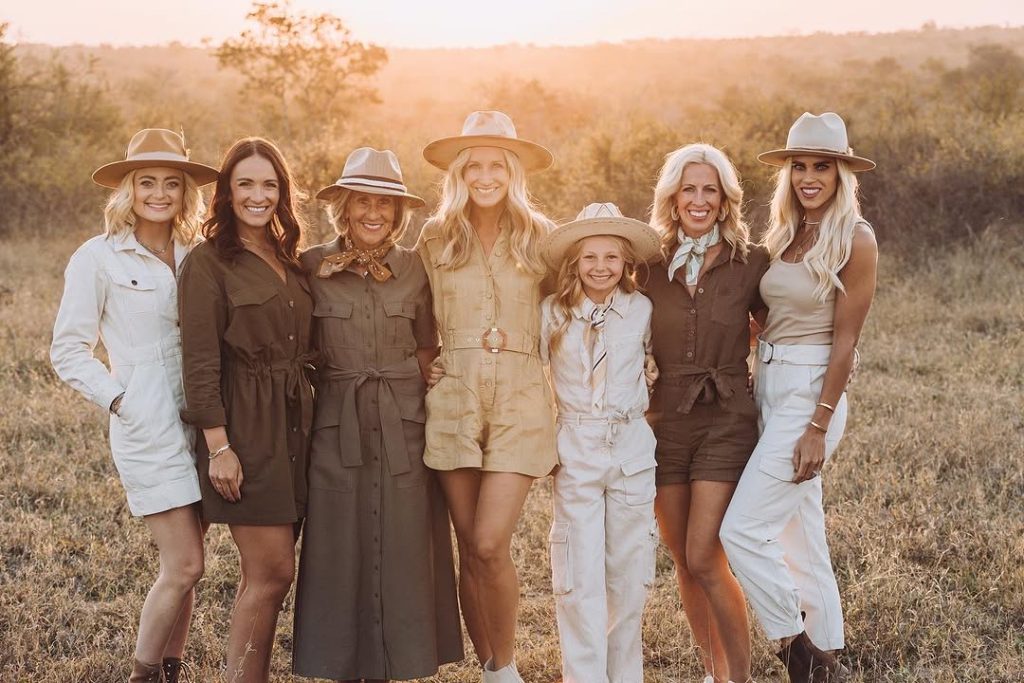
On all-women departures, the solo booker is typically in her late thirties to mid-fifties. She is professionally accomplished, well-travelled in the conventional sense, and arriving at a point where the standard markers of a successful trip — the Michelin-starred dinner, the business-class seat, the five-star hotel — no longer produce the quality of experience they once did. She is not looking for more luxury. She is looking for a different kind of depth.
On mixed group departures, the solo booker spans a wider age range and a wider set of motivations. What they share is a lack of interest in joining a tour in the conventional sense.
They are not tour group people. They are people who want the social ease of shared travel without the compromises of mass tourism — and who have worked out, correctly, that a capped group of twelve with a senior guide and private vehicles is an entirely different animal.
If you are a solo traveller still working through the broader question of whether group travel is right for you at all, our companion piece on that specific decision covers it in considerably more detail: The Questions Solo Travellers Ask Before Booking a Group Safari — Answered Without a Script.
The One Thing Both Formats Share
Whichever format you choose, the experience at the centre of it is identical in the ways that matter most.
You will be in a landscape that is genuinely, confrontationally extraordinary. You will be guided by someone who has spent more time in this specific wilderness than most people have spent in their own homes.
You will eat well, sleep in the kind of stillness that urban environments cannot manufacture, and return home carrying something that does not immediately have a name.
The all-women departure does not produce a more transformative experience than the mixed group. It produces a differently-shaped one.
The transformation, in both cases, is the same category of thing: a recalibration of what you consider necessary, a loosening of the grip of the version of yourself you maintain for other people’s benefit, and a quiet but durable shift in what you are prepared to tolerate from your ordinary life when you return.
The bush does this regardless of who is sitting in the vehicle next to you.
The question is simply which vehicle you want to be in.
The 2026 and 2027 Departures
All-Women Departures — Maximum 6 guests
- 10–22 November 2026 · Arusha, Tarangire, Serengeti, Zanzibar.
- 20 June–2 July 2027 · Arusha, Tarangire, Lake Manyara, Ngorongoro, Zanzibar.
- 10–22 November 2027 · Arusha, Tarangire, Serengeti, Zanzibar.
Group Departures — Maximum 12 guests
- 5–15 December 2026 · Northern Circuit.
- 5–16 June 2027 · Northern Circuit with Migration.
- 5–15 December 2027 · Northern Circuit.
To discuss which departure is right for you, contact the team directly
The conversation has begun.
Your details have reached us. We are already considering your journey.
Expect a response before the day is out — precise, personal, and worth the wait.
No sales process. No pressure. Just a direct conversation about what you are looking for.