
The Tanzania northern vs southern circuit safari question is the one most serious travellers eventually arrive at — and most comparison guides answer it badly.
They will tell you both circuits are excellent, that it depends on your interests, and that a specialist can help you decide. Then they will fail to tell you anything specific enough to actually make a decision.
This is not that guide.
The Tanzania northern vs southern circuit safari debate has no universally correct answer. It has a correct answer for you — and finding it requires understanding not just what each circuit contains, but what each one does to a person who spends meaningful time in it.
Wildlife, terrain, atmosphere, logistics, and the less-discussed matter of what you are actually seeking when you decide this is the year you go.
That is what this comparison covers. Directly. Without the vagueness.
Tanzania Northern and Southern Circuit Safari: The Geographic Difference
Understanding the Tanzania northern circuit safari begins with Arusha — the operational hub for most East African wildlife travel. The core parks running west and south from there are Tarangire, Lake Manyara, the Ngorongoro Conservation Area, and the Serengeti.
A quality northern circuit of eleven to thirteen days will move through three or four of these, connected by light aircraft or overland road.
The Northern Circuit is Tanzania’s most visited wilderness region. This statement requires immediate context: Tanzania’s visitor numbers are a fraction of Kenya’s, and the private concessions and exclusive camps that define quality northern itineraries are genuinely uncrowded by global standards. But by Tanzanian standards, the north is the circuit that the world knows.
The Serengeti is one of the most recognisable wildlife destinations on earth. The Ngorongoro Crater has appeared on more magazine covers than any other African landscape. The infrastructure is mature, the airstrips reliable, the lodges refined by decades of operation.
The Tanzania southern circuit safari covers a vast, deliberately less-trafficked region running south and west from Dar es Salaam.
The principal parks are Nyerere National Park — formerly the Selous, the largest protected reserve on the African continent — and Ruaha National Park, the second largest park in Tanzania and one of the most ecologically significant lion habitats remaining on earth.
A quality southern circuit of eight to ten days typically covers both.
The South is Tanzania’s least visited major wilderness. Not because it is inferior — in several measurable respects it is the more extraordinary ecosystem — but because it requires deliberate effort to reach and has historically had significantly less marketing infrastructure behind it.
Northern vs Southern Circuit Safari Tanzania — What You Will Actually See
This is the section most circuit comparisons handle with the most vagueness. Here it is specific.
Northern Circuit wildlife:
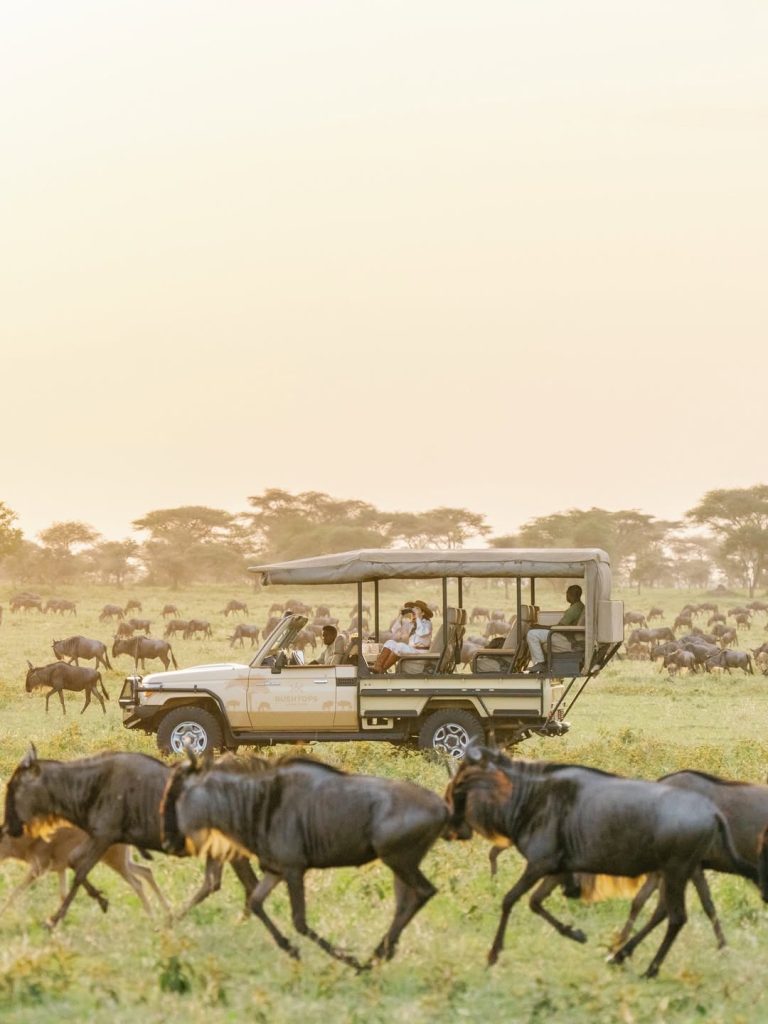
The Serengeti hosts the Great Wildebeest Migration — the annual movement of approximately two million wildebeest, zebra, and gazelle in a circular route driven by rainfall and grass.
The timing means different phases are visible at different windows: calving season in the southern Serengeti between January and March, the Mara River crossings in the north between July and October, the southward return through the central plains in November and December.
The Ngorongoro Crater contains one of the highest densities of large mammals on earth within its 265 square kilometres — including one of the last viable black rhino populations in East Africa.
The crater floor offers Big Five viewing at a concentration that open savannah ecosystems cannot match.
Tarangire holds the largest elephant population of any park in Tanzania, particularly during the dry season when elephants converge on the Tarangire River from across the wider region.
What the Tanzania northern circuit safari does not reliably offer: genuine remoteness, off-road driving in the public parks, night drives, or the specific quality of encounter that comes from being, genuinely, the only people for many kilometres in any direction.
Southern Circuit wildlife:
Ruaha contains an estimated ten percent of the world’s remaining lion population. This statistic does not convey the experience of it — which is of lion encounters that are frequent, prolonged, and conducted in a landscape where you are unlikely to see another vehicle at the same sighting.
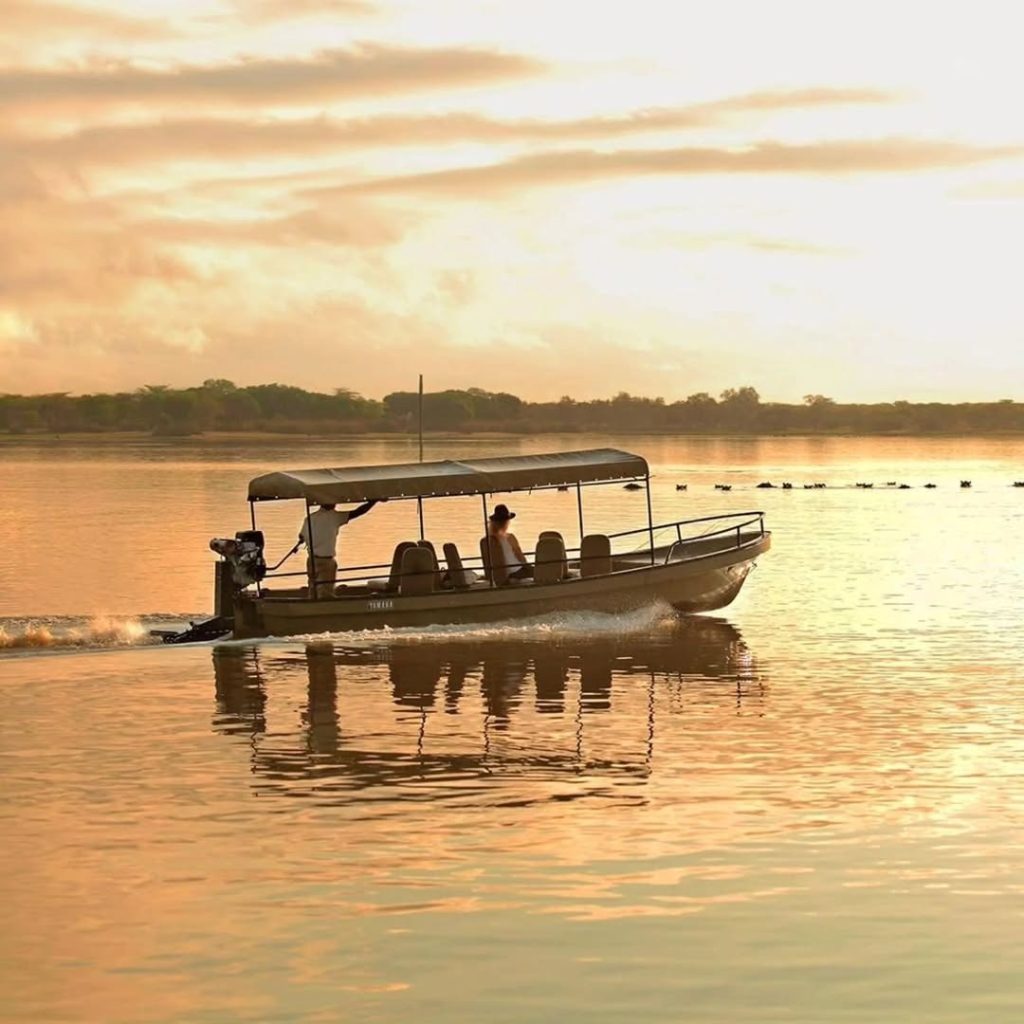
Nyerere’s Rufiji River system offers a water-based safari dimension the north cannot match — boat safaris where elephants swim across in front of your bow, crocodiles slide from banks, and hippos surface two metres from the hull. A completely different mode of encounter, at a different pace and a different register.
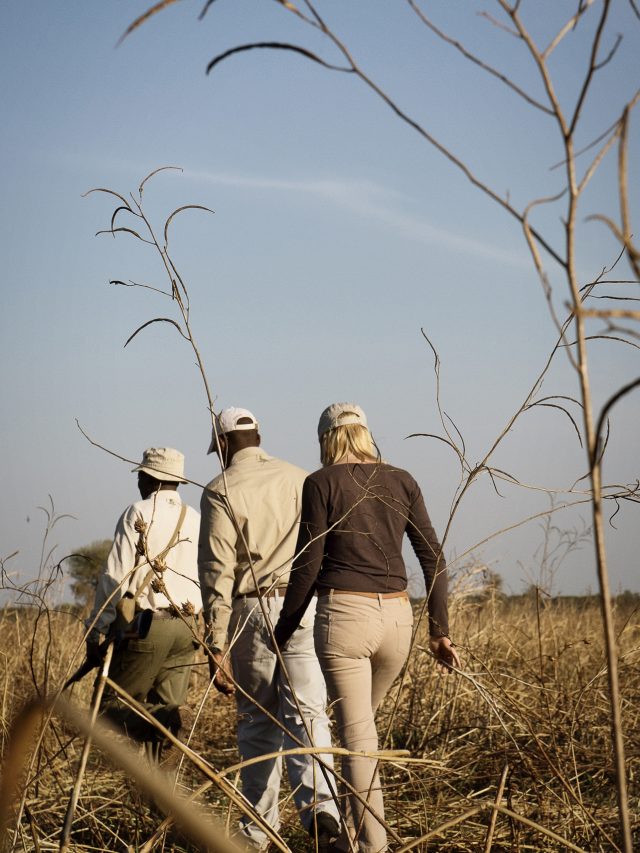
The Tanzania southern circuit safari also offers walking safaris of a depth the public northern parks restrict: full-day bush walks with armed senior guides, reading the ecosystem on foot, tracking predators through dry riverbeds. In the south, walking is the primary mode of encounter rather than an add-on.
What the south does not reliably offer: the scale of the wildebeest migration, the crater experience, or the logistical convenience of the north.
What the Tanzania Northern and Southern Safari Circuit Feels Like?
This is the comparison most companies avoid because it requires honesty about subjectivity.
The Northern Circuit;
Feels like the Africa you imagined. The Serengeti delivers on its reputation with a consistency that is genuinely unusual in travel — it is one of the few places in the world where the reality regularly exceeds the expectation.
The scale of the landscape, the density of wildlife, the quality of light in the hour after sunrise, the acoustic environment of a pre-dawn game drive — all of this is as extraordinary as advertised.
What the north also carries, inescapably, is a quality of shared experience. You are not the first person to watch a lion hunt from a vehicle on the Serengeti.
The ecosystem has been hosting this specific form of travel for sixty years. The emotional register tends toward exhilaration, wonder, and the particular feeling of witnessing something famous.
The Southern Circuit;
feels like a discovery. This is not a romantic exaggeration — it is the consistent testimony of guests who have experienced both sides of the Tanzania northern vs southern circuit safari question.
The south offers the specific, irreplaceable quality of being somewhere that has not yet been processed by the global travel imagination. The landscape is rawer, the encounters more unmediated, the atmosphere considerably more still.
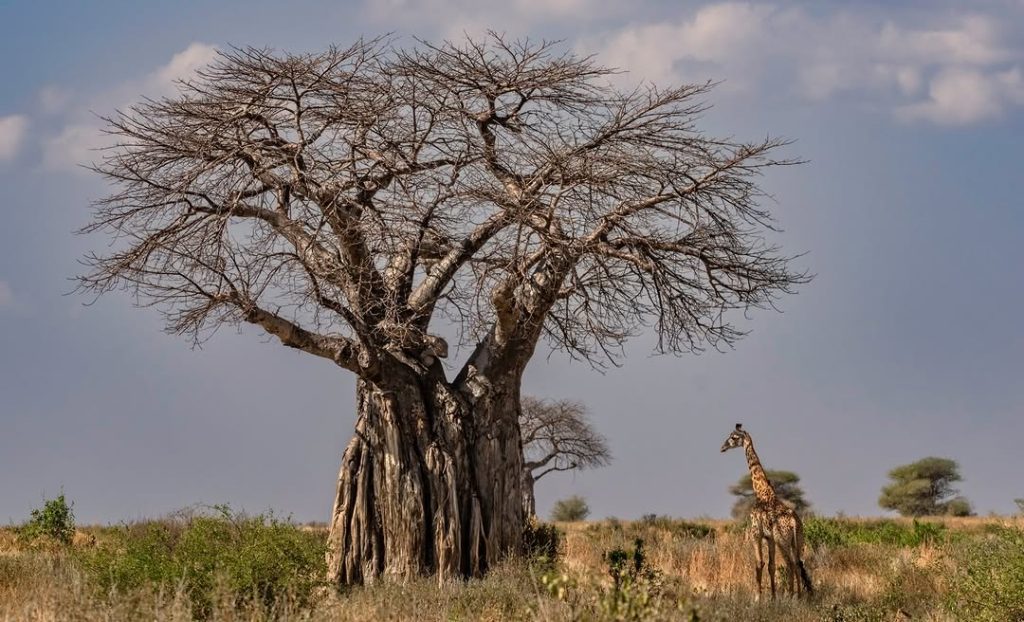
The emotional register of the south is different: less exhilaration, more weight. The Ruaha baobab forests produce something closer to awe in its more ancient sense — the experience of confronting something vast, indifferent, and genuinely old.
The Rufiji River at dusk is not spectacular in the way the migration is spectacular. It is affecting in the way that a very old, very patient thing is affecting.
Guests who do the north first consistently describe the south as the more enduringly resonant experience. Guests who do the south first often find the north more immediately gratifying.
The Logistics: What Each Requires of You
Northern Circuit logistics are straightforward. You fly into Kilimanjaro International Airport — reliable direct or one-stop connections from most major European and Middle Eastern hubs.
Arusha serves as the operational base. Domestic light aircraft connect the parks in thirty to forty-five minute flights. The airstrips are maintained. The system has been running reliably for decades.
Southern Circuit logistics require one additional variable: international arrival into Dar es Salaam rather than Kilimanjaro. Dar is well-connected but is a working port city rather than a safari town, and most quality southern itineraries are designed to move guests through it quickly.
Domestic flights from Dar into Nyerere and Ruaha are reliable but operate on smaller aircraft with more variable airstrip conditions than the north. Not a deterrent — information worth having.
The south also requires a higher degree of comfort with genuine remoteness. Mobile phone signal in Ruaha is limited to specific points near the lodge.
Wi-Fi in deep bush camps is intentionally minimal. For most guests seeking the Tanzania southern circuit safari experience, this is precisely the point.
The Deeper Question Behind the Tanzania Northern vs Southern Circuit Safari
Underneath the wildlife comparisons and the logistics detail, the question most people are really asking when they research the Tanzania northern vs southern circuit safari is this: Which one will change me more?
The honest answer is that neither changes you more than the other. They change you differently.
The northern circuit, at sufficient duration, produces the attentional restoration and neurological reset that sustained wilderness immersion reliably delivers — the cortisol reduction, the cognitive restoration, the reconnection with the brain’s default mode network.
We cover the mechanism of this in detail here: The Neuroscience of Doing Nothing: What Four Days in the Serengeti Does to a Burned-Out Brain.
The southern circuit produces those same effects, compounded by something harder to quantify: the particular clarity that comes from genuine obscurity.
From being somewhere that very few people have been. From an encounter with wilderness that has not yet been mediated by decades of shared human attention.
What this means practically: if depth and remoteness matter more than spectacle, the south has the edge. If the Great Migration or the Ngorongoro Crater are specifically on your list — if the iconic experience is part of what you need — the north delivers that in a way the south cannot.
And if you have time for both, the combination produces something neither circuit alone can offer: the full range of Tanzania, from the famous to the forgotten.
For the science of why the duration of your safari matters as much as the destination: The 11-Day Threshold: Why a Long Weekend in Nature Is Not the Same as Coming Back to Yourself.
Book Our Tanzania Northern Circuit Safari — 2026 and 2027 Departures
East Africa Safari Guides’ group departures travel the Northern Circuit. These are the specific routes, lodges, and ecological windows built into the 2026 and 2027 programme:
All-Women — Maximum 6 guests:
- 10–22 November 2026 — Arusha, Tarangire, Serengeti, Zanzibar.
- 20 June–2 July 2027 — Arusha, Tarangire, Lake Manyara, Ngorongoro, Zanzibar.
- 10–22 November 2027 — Arusha, Tarangire, Serengeti, Zanzibar.
Mixed Group — Maximum 6 guests:
- 5–15 December 2026 – Northern Circuit.
- 5–16 June 2027 – Northern Circuit with Migration.
- 5–15 December 2027 – Northern Circuit.
Southern circuit private itineraries are available on request for guests seeking the Ruaha and Nyerere experience. These are fully bespoke, built around your specific travel window and requirements.
For the group departure format: The Questions Solo Travellers Ask Before Booking a Group Safari — Answered Without a Script.
For the all-women versus mixed group format:All-Women Safari vs. Mixed Group Travel: How to Know Which One Is Actually Right for You.
To discuss which circuit and which departure suits you, contact our Naturalist and Travel Speciliast below.