
The first thing genuine Tanzania safari guide experience teaches — and this takes years, not weeks — is how to do very little and have it mean everything.
Not every guide learns this. The ones who do are the ones worth travelling with.
Understanding what separates a senior Tanzania safari guide with three decades in the field from a competent, recently trained one requires understanding what the bush actually demands of the person responsible for reading it. Wildlife knowledge is the smallest part of it.
What the years build — slowly, through failure as much as success — is a quality of attention and a depth of contextual understanding that no training programme can compress into a curriculum.
This is what that expertise looks like. And why it changes the experience of everyone who travels with someone who possesses it.
What Tanzania Safari Guide Experience Actually Measures?
A training certificate measures the completion of a course. Tanzania safari guide experience of twenty or thirty years measures something fundamentally different: the accumulation of encounters that did not go as planned, and the knowledge built from navigating each one.
The Tanzanian bush is not a static environment. The Serengeti of January is a different landscape from the Serengeti of July — not just in terms of which animals are present, but in terms of the light, the grass height, the water sources, the predator movement patterns, the specific behaviour of individual animals that a guide who has been in this territory for decades knows by reputation if not by name.
A guide with three decades of Tanzania safari guide experience in the northern circuit has watched individual elephant families across generations.
They have seen drought years and flood years. They have observed how a pride of lions on the Serengeti plains shifts its territory across a decade and what that shift means for where to position the vehicle on a morning drive.
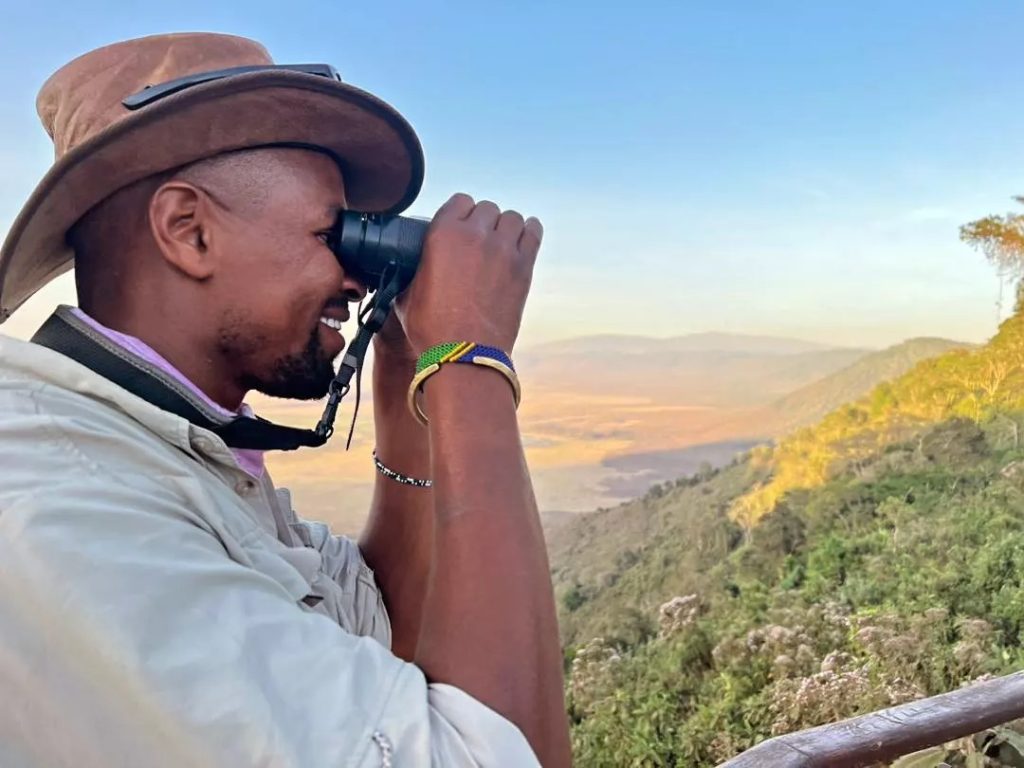
They have learned, through thousands of hours of quiet observation, the specific body language that precedes a predator hunt — and, crucially, the specific body language that does not.
This knowledge is not in any textbook. It is not transferable through instruction. It accumulates through presence, and only through presence.
What an Experienced Tanzania Safari Guide Reads That Others Miss?
The most valuable thing an experienced Tanzania safari guide does is almost invisible to the guests in the vehicle.
It is the decision not to stop at the impala sighting because something in the behavior of the herd — a particular directional tension, a quality of stillness on one flank — suggests something is watching from the tree line to the east.
It is the choice to drive slowly past the riverbank rather than parking immediately, because a guide who has sat at this specific bend for thirty years knows that the crocodiles here move earlier than the ones four hundred metres downstream.
It is, more than anything, the reading of context. The bush communicates constantly and in multiple registers simultaneously — sound, movement, track, scent, the behaviour of birds, the direction of the wind — and the ability to synthesise all of this into a real-time picture of what is happening in the surrounding environment is not a skill that training produces. It is what years of Tanzania safari guide experience slowly, incrementally builds.
The guest in the vehicle rarely knows what they are benefiting from. They simply find themselves, with a regularity that feels almost magical, in exactly the right place at exactly the right moment.
The Social Architecture of a Good Guide
Tanzania safari guide experience is not only about wildlife. The guide is, simultaneously, a logistical coordinator, a cultural interpreter, a social architect, and — on the longer, more immersive journeys that our departures are designed around — something closer to a Mindset Mentor.
The social dimension is the one most often overlooked in how guides are evaluated. A guide who can identify every bird in the Serengeti but cannot read the temperature of a group — who cannot sense when a guest needs silence rather than commentary, when the vehicle should stay rather than move, when the collective energy of the morning requires an hour by the river rather than a push toward the next park boundary — is a guide who is delivering information rather than an experience.
Senior guides learn to manage all of this without appearing to manage any of it. The experience feels effortless to the guests because the effort is invisible.
The pacing of the day, the choice of sighting to linger at, the timing of the bush breakfast, the decision to end the afternoon drive slightly early to catch a particular quality of evening light from a specific kopje — all of these are deliberate, all of them are informed by decades of accumulated judgment, and none of them are announced.
This is what genuinely experienced Tanzania safari guides do. Not entertain. Not perform. Architect.
What Guide Experience Means for a Transformative Journey Specifically?
For guests travelling on our departures — which are designed explicitly around transformation rather than entertainment — Tanzania safari guide experience of this depth is not a premium feature. It is the operational prerequisite.
The difference between a competent guide and a senior guide on an immersive, extended-stay journey is the difference between a well-executed itinerary and an experience that produces something lasting.
The science of wilderness immersion and neurological reset — covered in our piece on what four days in the Serengeti does to a burned-out brain — depends in significant part on the guide creating the conditions under which the brain can downregulate.
A guide who creates stimulation rather than spaciousness, urgency rather than presence, performance rather than quiet attention, undermines that process regardless of how qualified they are on paper.
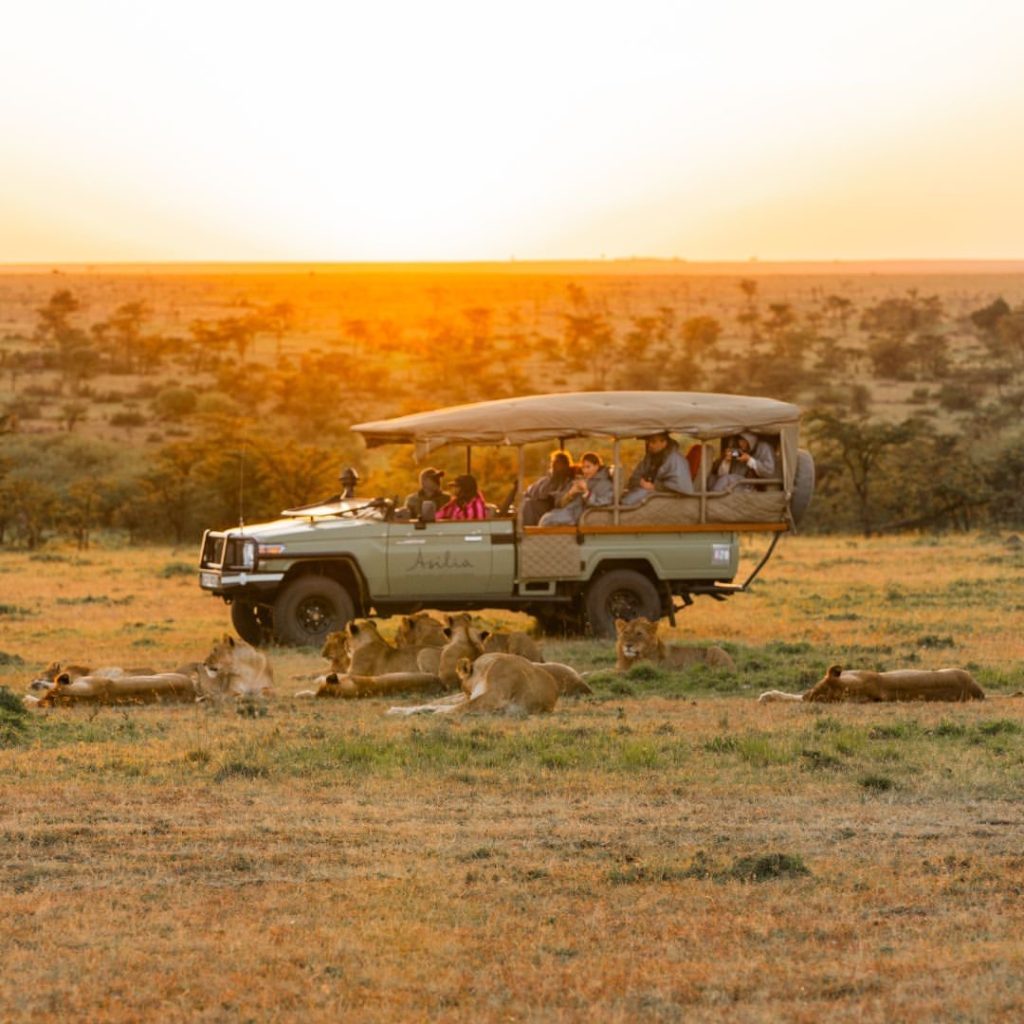
A senior Tanzania safari guide with genuine field experience does not rush. They do not fill silences. They do not position themselves as the authority in the vehicle. They position the vehicle, step back, and let the wilderness do the work it is equipped to do — which is, by any measure, considerably more impressive than anything the guide could manufacture.
The Annual Training Standard
At East Africa Safari Guides, every guide undergoes annual refresher training regardless of their years of experience. This is not because we believe training replaces experience — it does not, and nothing does.
It is because the bush changes, the lodges change, the logistics evolve, and best practice in areas like wilderness first response, conservation ethics, and guest communication continues to develop.
Senior Tanzania safari guide experience and current technical training are not alternatives. They are complementary requirements.
A guide with thirty years in the field and a certification that has not been reviewed in a decade is not the same as a guide with thirty years in the field and the discipline to keep learning within that expertise.
Our guides hold current wilderness first-response certification. They operate under a written code of conduct reviewed annually. And they have the kind of specific, granular knowledge of Tanzania’s northern circuit — its microclimates, its seasonal patterns, its individual animal populations — that comes only from having been in these specific places, with these specific conditions, for a very long time.
What to Ask When You Are Evaluating a Safari Operator
Tanzania safari guide experience is rarely discussed in marketing materials at a level of specificity that is useful. Most operators will tell you their guides are experienced and passionate.
Few will tell you how many years of field experience in Tanzania specifically, which parks they know best, whether they hold current technical certifications, or what the ratio of repeat guests to first-time guests looks like — which is, in practice, one of the most honest measures of guide quality available.
When evaluating any experienced Tanzania safari guide or the operator who employs them, the questions worth asking are specific: How long has this guide been working in the northern circuit? Do they work in any other country or exclusively in Tanzania? What is their training and certification status? How many of their guests request them by name on return visits?
The answers to these questions tell you more about what your journey will actually feel like than any photograph of a lodge room or a list of parks visited.
The Guides on Our Departures
Every East Africa Safari Guides departure is led by a senior field guide with between 15 and 30 years of specific Tanzania experience.
Our guides have not been assembled from a general pool — they are practitioners we have worked alongside, evaluated in the field, and trusted with guests whose journeys matter to us as much as they matter to the guests themselves.
For the broader case for the luxury transformative journey format these guides operate within: Why High-Performing People Keep Coming Back to Tanzania — And What They’re Actually Looking For.
For the comparison of Tanzania’s two circuits and what guide knowledge means in each: Northern Circuit vs. Southern Circuit: The Honest Guide to Choosing Your Tanzania Safari.
All-Women Departures — Maximum 6 guests
- 10–22 November 2026
- 20 June–2 July 2027
- 10–22 November 2027
Mixed Group Departures — Maximum 6 guests
- 5–15 December 2026
- 5–16 June 2027
- 5–15 December 2027
To discuss which departure and which guide is the right fit for your journey. Talk to our Senior Travel Speciliast below.