
A Serengeti wellness safari is, at its most basic, a mental reset. But that phrase does not begin to describe the mechanism — and the mechanism is the part worth understanding before you book anything.
You have taken the holiday. You have done the weekend away. You have tried the meditation app, the sleep supplements, the digital sabbath that lasted until Sunday afternoon. And you have returned from all of it feeling, at best, temporarily patched.
This is not a discipline failure. It is a biology problem. What the research on environmental neuroscience consistently shows is that a Serengeti wellness safari mental reset operates on a completely different neurological mechanism from any urban recovery strategy — not because it is more relaxing than a spa, but because it engages brain systems that structured retreats, beach holidays, and long weekends in the countryside cannot reach.

What follows is an explanation of why. Drawn from environmental neuroscience, cognitive psychology, and the consistent pattern of what happens to people who spend meaningful time in genuine wilderness.
What a Serengeti Wellness Safari Is Actually Resetting
Before the Serengeti can fix anything, it helps to understand precisely what it is fixing.
The modern high-performance brain operates in a state of sustained, low-grade threat response. Not fear — nothing so dramatic.
But a continuous low-frequency activation of the autonomic nervous system that keeps cortisol elevated, the prefrontal cortex running at partial capacity, and the brain’s default mode network — the system responsible for self-reflection, meaning-making, and genuine creative thought — functionally suppressed.
The cause is not any single stressor. It is the aggregate. The notifications. The context-switching. The ambient noise of open-plan offices and crowded commutes.
The particular quality of artificial light at the frequency spectrum modern screens emit. The predictability of built environments, which the brain — designed over hundreds of thousands of years to read complex, variable landscapes for threat and opportunity — processes as a kind of sensory poverty.
You are not tired because you work hard. You are tired because your nervous system has been running a low-level threat scan continuously, without interruption, for years. And the things you have tried to recover — the weekend, the holiday, the nap — have not interrupted that scan. They have merely paused it.
The Science Behind the Serengeti Mental Reset
The research that is most relevant here does not come from wellness culture. It comes from academic environmental psychology, and it is considerably more specific than the broad claim that nature is good for you.
The foundational framework is Attention Restoration Theory, developed by Rachel and Stephen Kaplan at the University of Michigan. Their work identified a distinction between two types of attentional engagement: directed attention, which is the focused, effortful concentration required by most modern work, and involuntary attention, which is the soft, effortless engagement produced by genuinely interesting natural environments.
The critical finding: directed attention fatigues. It depletes across a day, a week, a year. The only environment that allows it to genuinely restore — not merely rest, but rebuild — is one that engages involuntary attention in its place.
This is precisely what a Serengeti wellness safari delivers, and why it functions as a mental reset in ways that structured retreat environments cannot approach. The complexity of the stimulus is of a completely different order. A wildebeest herd moving across the plains is not the same cognitive experience as a duck pond.
The American Journal of Public Health study that followed 440 participants through extended wilderness exposure documented a 63% reduction in salivary cortisol markers across the sample. This is not a marginal improvement. It is a restructuring of the hormonal baseline.
Day One: The Nervous System Does Not Believe You
The first thing that happens when you arrive in the Serengeti is nothing. Or rather — the first thing that happens is that your nervous system simply does not believe the environment is real.
This is a documented phenomenon. Urban dwellers entering genuine wilderness for the first time in an extended period often report a quality of unreality about the experience in the first twelve to twenty-four hours. The stillness reads as suspicious.
The absence of notifications creates a background anxiety — a reaching for the phone that finds nothing there. The brain, calibrated to a different landscape, has not yet begun to downregulate.
This is not a failure of the experience. It is evidence of how deep the recalibration needs to go.
By evening of day one — after a game drive, a bush dinner, the particular quality of a Serengeti sunset that has the strange effect of making time feel entirely different from what it was in the city — most guests on our Serengeti wellness safari departures report the first tangible loosening.
Not transformation. A loosening. The nervous system beginning, tentatively, to believe that the threat scan can be suspended.
Day Two: The Proprioceptive Shift
Something specific happens on the second day that most wellness narratives miss entirely.
It is physical.
Walking on uneven earth — the red dust of a Tarangire riverbed, the rocky outcrops of the Ngorongoro highlands, the long grass of the Serengeti plains — engages proprioceptive systems that desk-based life systematically silences.
Proprioception is the body’s sense of its own position in space, mediated by a network of receptors in the muscles, joints, and tendons. Flat, predictable surfaces — carpeted offices, paved streets, gym floors — require almost no proprioceptive engagement.
The system, underused, begins to function at reduced capacity. And proprioceptive function, research increasingly suggests, is deeply connected to emotional regulation.
The body that cannot feel itself in space is, neurologically, a body with reduced capacity to feel itself in time — to be present, to read its own internal states, to respond rather than react.
Walking in the bush wakes this system back up without yoga, without breathwork, without conscious intention. It simply requires uneven ground and the absence of a pavement.
Day Three: The Serengeti Wellness Effect Reaches the Default Mode Network
By day three, something subtler and more significant begins.
The default mode network — the interconnected brain regions that activate during self-reflective thought, creative cognition, and what neuroscientists call prospective memory — begins to resume normal function. Research from the University of Utah, led by David Strayer, tracked participants across a four-day wilderness immersion and documented a 50% increase in creative problem-solving performance on the fourth day. The mechanism was the restoration of the default mode network through sustained relief from directed attention load.
What this means in practice: the things you could not think through at your desk — the decisions that felt impossible, the creative problems that had gone stale, the personal questions you had been too depleted to approach — become accessible again. Not because the bush gives you the answers. Because it gives the brain the conditions under which your own cognitive architecture can generate them.
This is the core of what a Serengeti wellness safari does that a week at a beach resort cannot. The beach removes the stressor. The mental reset restores the system. These are different operations, and only one of them produces lasting change.
Day Four: The Baseline Has Moved
By day four, the research and the consistent testimony of guests across our departures converge on the same observation.
You are not the same person who arrived.
Not in any dramatic or mystical sense. In a measurable, neurological one. Your cortisol baseline has dropped. Your attentional systems have been running on involuntary engagement long enough that directed attention fatigue has genuinely reversed. Your proprioceptive system is engaged. Your default mode network is active.
You are thinking at the capacity you were built to think at. Which is, for most people who arrive at this point, a capacity they had genuinely forgotten they possessed.
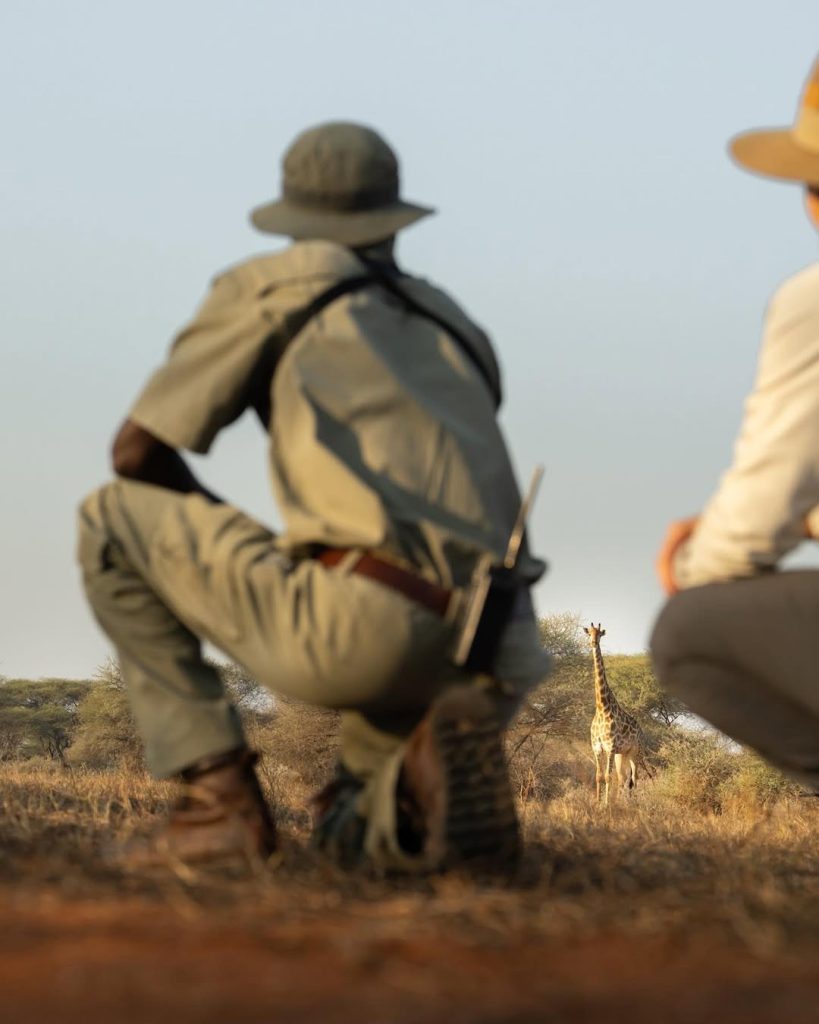
The particular genius of the Serengeti as a wellness safari mental reset environment — as distinct from a spa, a retreat, or a coastal holiday — is that it achieves all of this without asking anything of you. You do not have to practise anything. The landscape does the work. Your brain cooperates. The biology follows.
This is what doing nothing means in genuine wilderness. It is the most active form of recovery the human brain is capable of. It simply does not feel like work — which is precisely why it works.
Why a Serengeti Wellness Safari Mental Reset Needs More Than Four Days?
Four days is the point at which the research documents measurable change. It is not the point at which the change is durable.
Studies tracking participants after wilderness immersion show that cognitive and cortisol benefits persist meaningfully for between two and four weeks following a four-day exposure. After which the urban environment reasserts its baseline. The scan resumes. The cortisol climbs.
Eleven days — the minimum threshold of our group departure format — is a different category of experience entirely. Research from Columbia University’s Lab for Scalable Mental Health identifies eleven days as the point at which neurological changes begin to produce lasting behavioural shifts rather than temporary physiological relief. Not a two-week reprieve. A genuine reset of the operating system.
This distinction — between temporary relief and lasting recalibration — is the subject of our companion piece: The 11-Day Threshold: Why a Long Weekend in Nature Is Not the Same as Coming Back to Yourself.
Four days shows you what is possible. Eleven days makes it stick.
What This Means for How You Travel?
The practical implication of all of this is not that you need to spend more money. It is that the format of your recovery matters as much as the fact of it.
A week at a high-stimulation resort — crowded restaurants, ambient social performance, the particular quality of a luxury hotel that is indistinguishable from every other luxury hotel you have stayed in — does not produce the attentional restoration that a Serengeti wellness safari mental reset does, regardless of how expensive the room is. The environment is not complex enough. The involuntary attentional engagement is not deep enough. The default mode network never fully comes online.
This is why our group departures are structured around extended stays at single locations rather than the move-every-two-days pace of conventional safari tourism. Four nights at Chem Chem. Three nights in the Serengeti. The nervous system needs time that most itineraries are not designed to give it.
The Six Departures
If you have read this far, the science has either confirmed something you already suspected or given a name to something you have been feeling for a while.
Either way, the question is the same: when?
All-Women Departures — Maximum 6 guests:
- 10–22 November 2026 · Arusha, Tarangire, Serengeti, Zanzibar.
- 20 June–2 July 2027 · Arusha, Tarangire, Lake Manyara, Ngorongoro, Zanzibar.
- 10–22 November 2027 · Arusha, Tarangire, Serengeti, Zanzibar.
Mixed Group Departures — Maximum 6 guests:
- 5–15 December 2026 · Northern Circuit.
- 5–16 June 2027 · Northern Circuit with Migration.
- 5–15 December 2027 · Northern Circuit.
If you are travelling alone and working through whether a group format is right for you: The Questions Solo Travellers Ask Before Booking a Group Safari — Answered Without a Script.
If you are a woman deciding between formats: All-Women Safari vs. Mixed Group Travel: How to Know Which One Is Actually Right for You.
To discuss a specific departure, contact our travel specialist just by filling details below;