
A luxury transformative safari in Tanzania is, on the surface, an unusual solution to the problem most high-performing people are carrying. It is not the most obvious prescription.
It is not what their therapist suggested, or their executive coach, or the weekend retreat programme their company funded. But it is the one that keeps working — and it is the one they keep returning to.
This is not a coincidence. And it is worth understanding why.
What Brings Them the First Time
The first Tanzania safari for most high performers is booked for the conventional reasons. Wildlife. Adventure. A landmark birthday or a significant anniversary.
The Serengeti is on the list of things they want to see before a certain age, and the time has come to see it.
What they experience is not what they expected.
Not because the wildlife disappoints — it never does, and the Serengeti delivers on its reputation with a consistency that is genuinely rare in travel. But because something else happens that was not on the itinerary.
Something that occurs somewhere around day four in the bush, when the phone has been away long enough that the reaching for it has stopped.
When the morning game drive has delivered them, without ceremony, into a silence so complete and a landscape so vast that the mental architecture they have spent years constructing — the targets, the metrics, the carefully maintained sense of forward momentum — briefly loses its grip.
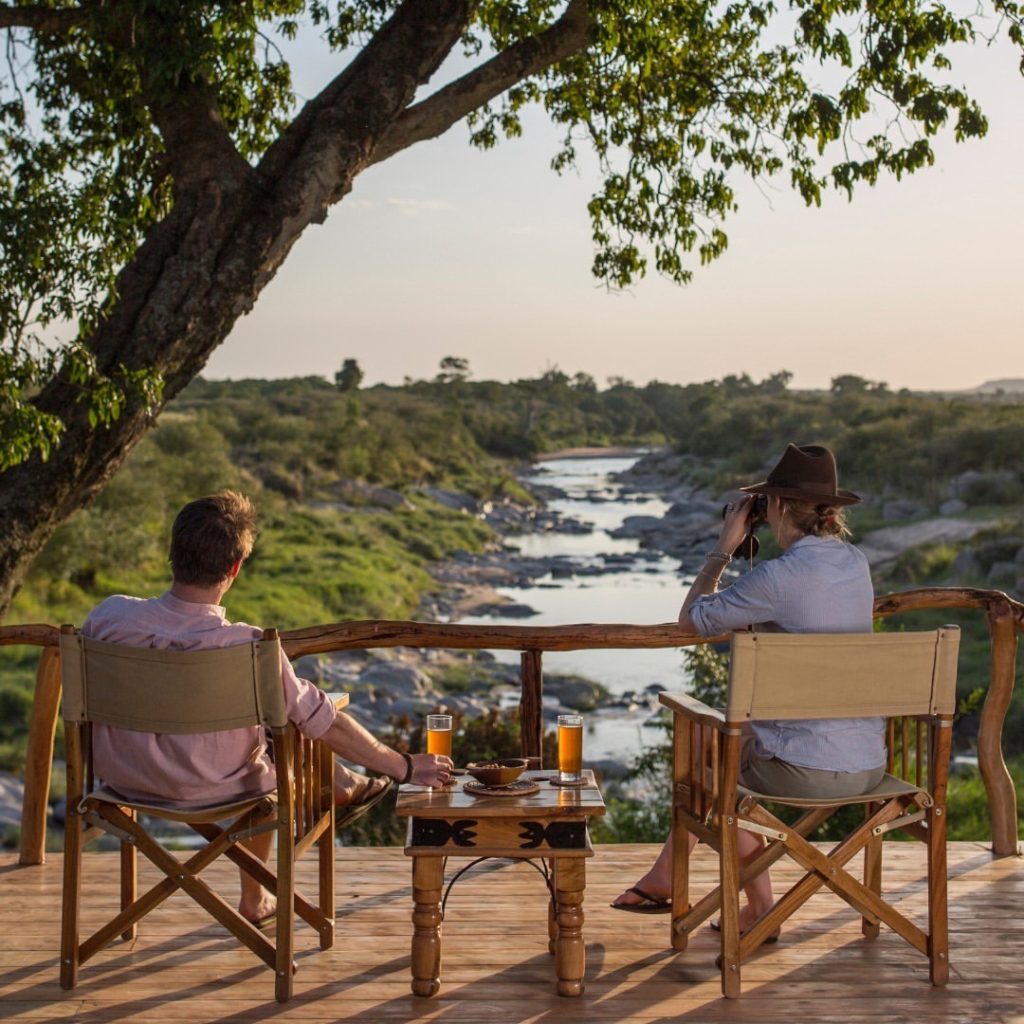
This is not relaxation. It is a different category of experience entirely. And most people who encounter it for the first time have no framework for it, because nothing in their professional or personal life has produced anything similar.
They return home changed in a way they struggle to articulate. They book again within eighteen months.
What a Luxury Transformative Safari Tanzania Delivers That Nothing Else Does
The word transformative is overused in travel marketing. It appears on the websites of wellness retreats, yoga programmes, and river cruises with equal confidence and, in most cases, equal inaccuracy.
In the specific context of a luxury transformative safari in Tanzania, it describes something measurable.
Environmental neuroscience research from the University of Michigan, the University of Utah, and Columbia University has documented, across multiple longitudinal studies, that extended wilderness immersion produces changes in the brain that structured retreat environments cannot replicate. Cortisol reduction of up to 63% in salivary markers.
A 50% improvement in creative problem-solving capacity after four days of nature immersion without digital devices. Lasting neurological shifts — as opposed to temporary physiological relief — that persist at three-month follow-up assessments for participants who completed eleven days or more.
High performers, by definition, operate at the edge of their cognitive capacity. They are not cognitively depleted in the way that someone in a chronic stress situation is depleted — they are running at a high level, but on a system that has not been genuinely rebooted in years.
The luxury transformative Tanzania safari format — extended stays, private vehicles, senior guides, no schedule imposed from outside — provides the specific environmental conditions the neuroscience identifies as necessary for that reboot to occur.
A spa weekend lowers cortisol for forty-eight hours. Eleven days in the Serengeti ecosystem changes the baseline.
The Profile of the Person Who Keeps Returning
There is a recognisable profile among the guests who return to Tanzania a second, third, and fourth time.
They are, typically, in their late thirties to mid-fifties. Professionally established — founders, senior executives, practitioners at the top of competitive fields.
Well-travelled in the conventional sense: the European city breaks, the Maldives beach holiday, the Japanese cultural immersion.
They have experienced excellent service and excellent food in many parts of the world and have largely stopped being impressed by those things alone.
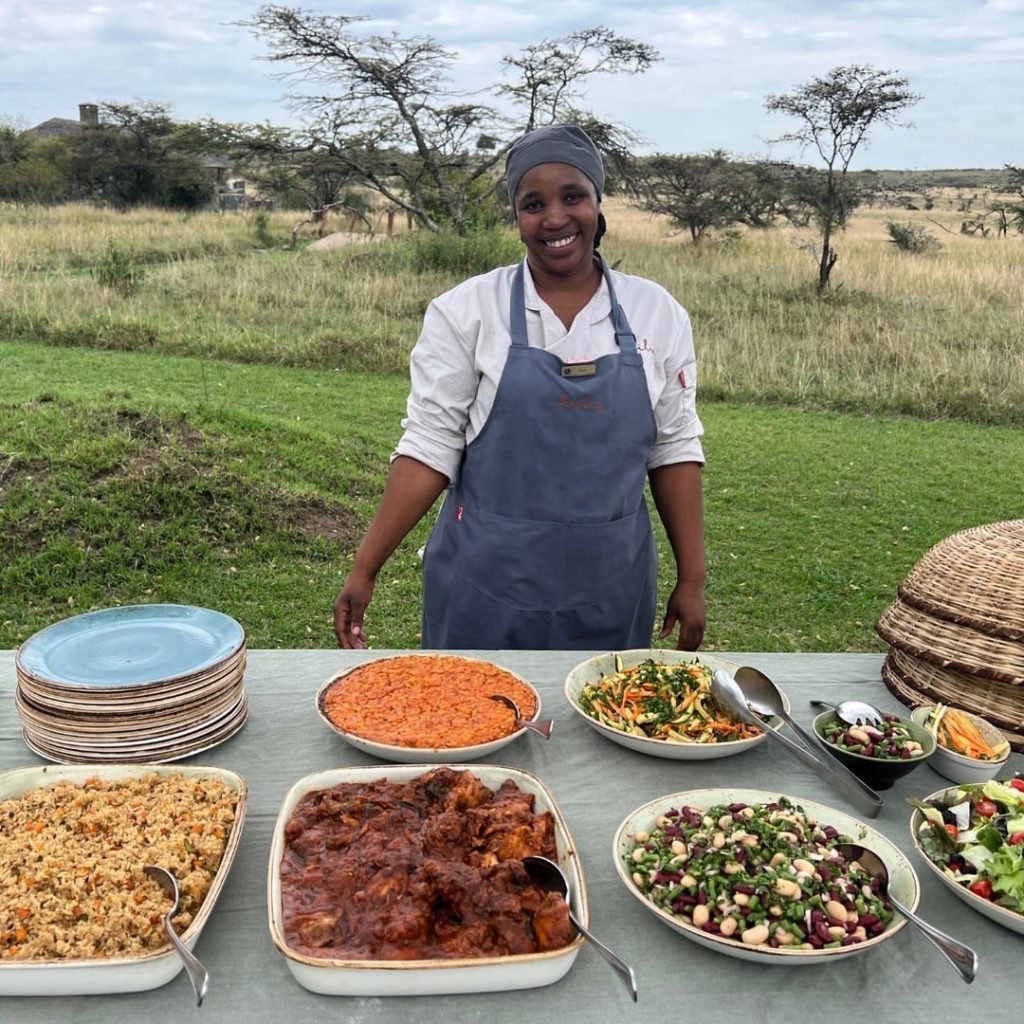
What they share is a quality of appetite that the standard markers of luxury travel no longer satisfy. They are not looking for more comfort. They are not looking for a more impressive hotel room.
They are looking for an experience that produces something — a shift in perspective, a quality of presence, a clarity of thought — that their ordinary life, however successful, does not generate.
The luxury transformative safari in Tanzania is one of the very few travel experiences that consistently delivers this. Not by design and not by accident — but because the ecological and neurological conditions of the Tanzanian wilderness are specifically suited to producing it.
Why Tanzania Specifically
Several wilderness environments on earth are ecologically complex enough to produce the attentional restoration that the neuroscience describes. The Amazon, the Himalayas, the Okavango all qualify in principle.
Tanzania’s specific advantages — for the high-performer profile specifically — are practical as much as ecological.
The northern circuit can be navigated by light aircraft between destinations. This means that an eleven or twelve-day luxury transformative Tanzania safari does not require long overland transfers between properties. You arrive at each lodge rested rather than depleted. The safari itself begins at the airstrip.
The lodges selected for this format are not hotels that happen to be located near wildlife. They are properties built with the specific psychology of genuine wilderness immersion in mind: extended wilderness access, wellness infrastructure, cuisine that is genuinely excellent rather than acceptable, and the particular quality of stillness that comes from being in the bush at five in the morning without another guest within hearing distance.
The guides bring 15 to 30 years of field experience in Tanzania specifically — not in wildlife generally, but in these specific parks, these specific seasonal patterns, these specific animal behaviour dynamics.
The difference between a guide who knows the Serengeti and a guide who knows this particular valley of the Serengeti at this time of year, in this rainfall pattern, with this lion pride — is the difference between tourism and the genuine article.
What a Luxury Transformative Safari Tanzania Looks Like in Practice
A high-performing guest on a luxury transformative Tanzania safari does not spend eleven days doing nothing. The experience is not passive. It is full — full of wildlife, of walking, of conversation, of food that is worth paying attention to, of evenings by fires that have no agenda.
What it is not full of is the particular kind of cognitive load that constitutes the working day. There are no decisions that matter beyond the immediate.
There is no future to manage beyond the next game drive. The guide handles the logistics, the camp team handles the provisions, the wilderness handles the rest.
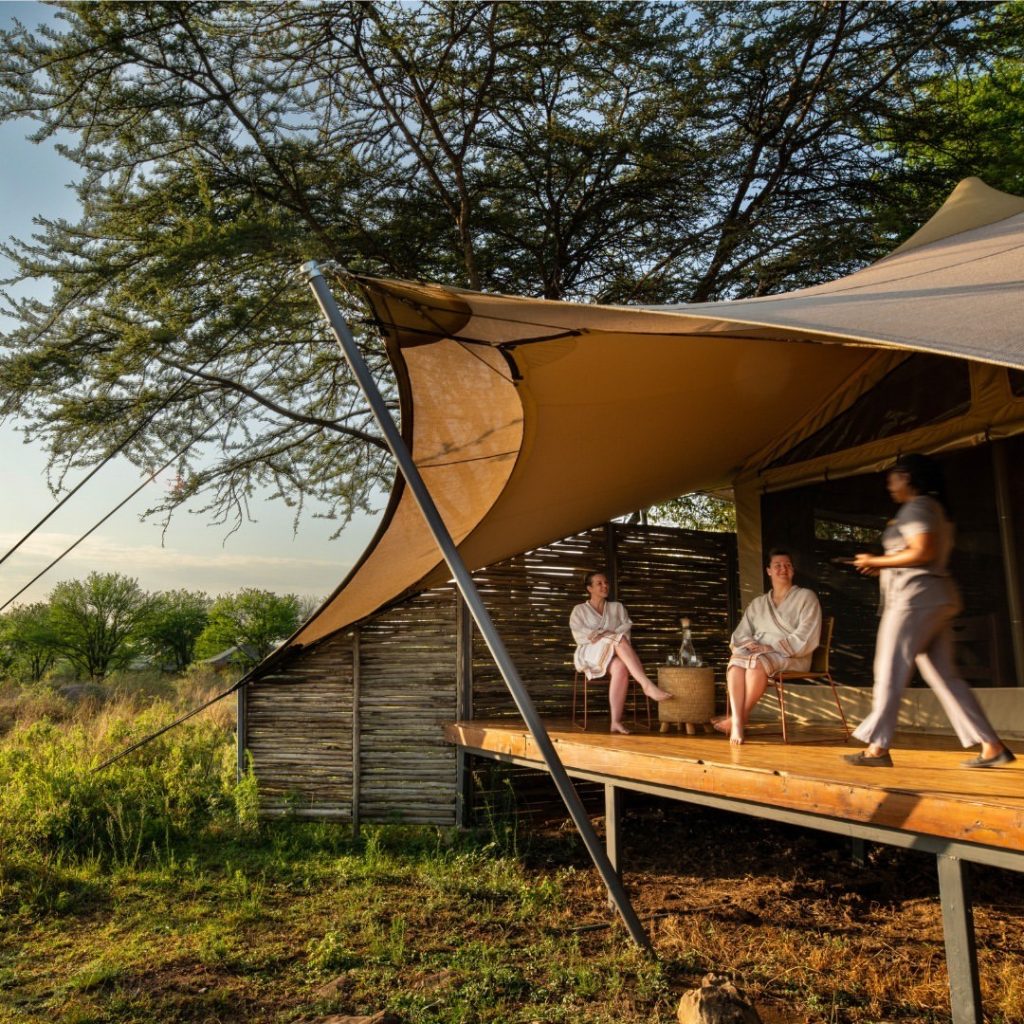
What happens in the space this creates is different for every guest. Some arrive with a specific problem they cannot solve and find it resolves without being deliberately worked at.
Some arrive exhausted and discover a quality of rest they had genuinely forgotten was possible. Some arrive simply curious and leave with something harder to name — a shift in what they consider necessary, a loosened grip on the version of themselves they maintain for other people’s benefit.
All of them, without exception, describe the experience as unlike anything else they have paid for.
The Return Visit
The high-performing guests who return to Tanzania are not chasing the first experience. They are not trying to replicate it.
What brings them back is the specific quality of clarity that the environment produces — and the recognition, after returning to their ordinary life, that nothing else produces it with the same reliability or the same depth. The spa will not do it. The meditation app will not do it. The long weekend in the countryside will not do it.
The luxury transformative safari in Tanzania does it because the conditions are right in a way that no managed wellness environment can engineer. The landscape is genuinely vast.
The silence is genuinely complete. The wildlife is genuinely wild. And the brain, confronted with all of this for long enough, responds in the way it was built to respond — not with stress, not with performance, but with the quality of open, expansive attention that high-performing people spend most of their lives producing and almost none of their time inhabiting.
This is what they come back for. And this is, quietly, what the whole thing is actually about.
The Departures
East Africa Safari Guides runs six fixed-date group departures across 2026 and 2027 — all designed around extended stays, private vehicles, and the ecological windows that produce the conditions described above.
All-Women — Maximum 6 guests
- 10–22 November 2026 – Arusha, Tarangire, Serengeti, Zanzibar.
- 20 June–2 July 2027 – Arusha, Tarangire, Lake Manyara, Ngorongoro, Zanzibar.
- 10–22 November 2027 – Arusha, Tarangire, Serengeti, Zanzibar.
Mixed Group — Maximum 6 guests
- 5–15 December 2026 · Northern Circuit.
- 5–16 June 2027 · Northern Circuit with Migration.
- 5–15 December 2027 · Northern Circuit.
For the neuroscience of what the Serengeti does specifically: The Neuroscience of Doing Nothing: What Four Days in the Serengeti Does to a Burned-Out Brain.
For the case for eleven days over a shorter trip: The 11-Day Threshold: Why a Long Weekend in Nature Is Not the Same as Coming Back to Yourself.
For the solo traveller still weighing group format: The Questions Solo Travellers Ask Before Booking a Group Safari — Answered Without a Script.