There is a line on the map that most safari travelers never cross. Not because it is difficult to reach, but because very few of them know it exists, and fewer still understand what crossing it makes possible.
It is the eastern boundary of Serengeti National Park, where the national park’s jurisdiction ends and the 10,000-acre Loliondo Conservancy begins — a private Maasai-owned concession where the rules that govern the park dissolve and a different, more intimate relationship with the Serengeti ecosystem becomes available.
AndBeyond Klein’s Camp sits on the other side of that line. And what it offers there cannot be found inside the park at any price.
Neuroscientists who study the psychology of awe and environmental immersion have found that the experience of genuine novelty — encountering a landscape without the interpretive frame of a familiar context — activates the brain’s default mode network in ways that structured, predictable experiences do not.
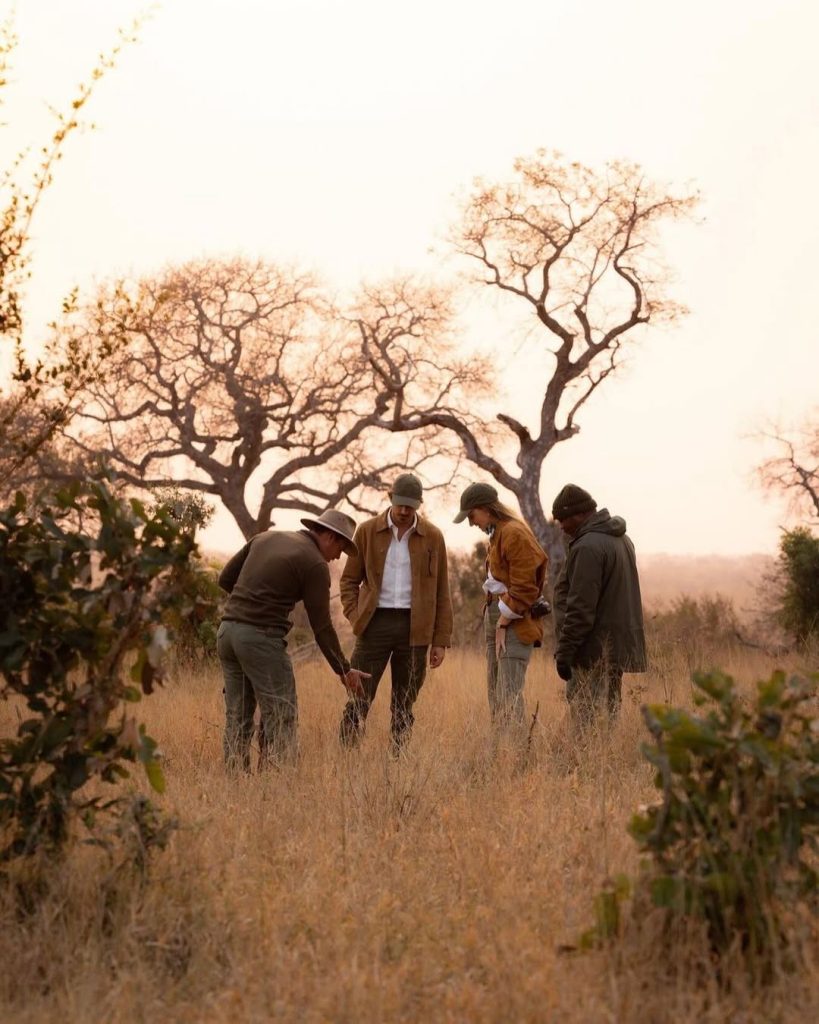
Put differently: the nervous system responds with its fullest attention to environments it cannot yet categorize. The Loliondo concession, with its wooded hillsides, rolling grasslands, and forested river banks operating under none of the Serengeti’s Park protocols, is precisely this kind of environment.
The vehicles here go off-road. The drives run into the night. The landscape is read by a guide who has spent years learning to interpret a territory that most of Tanzania’s safari infrastructure has not yet processed into a product.
The national park shows you the Serengeti. Loliondo lets you be inside it.”
What the National Park Cannot Give You
Serengeti National Park is one of the most extraordinary ecosystems on the planet. It is also, during its peak season, a shared experience. Vehicles must stay on established tracks. Night drives are not permitted.
Off-road driving is prohibited. These are not administrative inconveniences — they are conservation measures designed to protect an ecosystem that sustains over 1.5 million animals, and they are entirely correct. But they shape the nature of the encounter in ways that matter to the intentional traveler.
In the Loliondo concession, none of these constraints apply. When your guide identifies a leopard moving through dense scrub that no park track accesses, the vehicle goes to it. When the evening game drive produces something worth staying for as the light dies, the drive continues into the dark.
And when the nocturnal Serengeti — the one that operates without an audience for most of the year — presents itself, your driver-guide and front-seat tracker have the tools and the mandate to take you into it fully.
The night drive in the Loliondo concession is not a variation on the daytime game drive. It is a categorically different experience. Servals, aardvarks, civets, and genets operate in this darkness with a confidence they do not display in daylight.
Lions that spent the afternoon conserving energy begin their serious work. The bush is not quieter at night — it is differently loud, with a cast of actors that the standard safari circuit almost never surfaces.
Your guide uses a spotlight not to illuminate but to participate in a world that was already in motion before you arrived.
Most guests leave the Serengeti having seen its days. At Klein’s, you also see its nights.”
345 Bird Species and the Verreaux’s Eagle
The Loliondo concession has recorded over 345 bird species, a density that reflects both the ecological range of the habitat — from open grassland to dense riverine forest — and the absence of the disturbance patterns that suppress birdlife in heavily visited areas.
The rare Verreaux’s Eagle, one of Africa’s most architecturally striking raptors, is regularly sighted soaring the escarpment near camp.
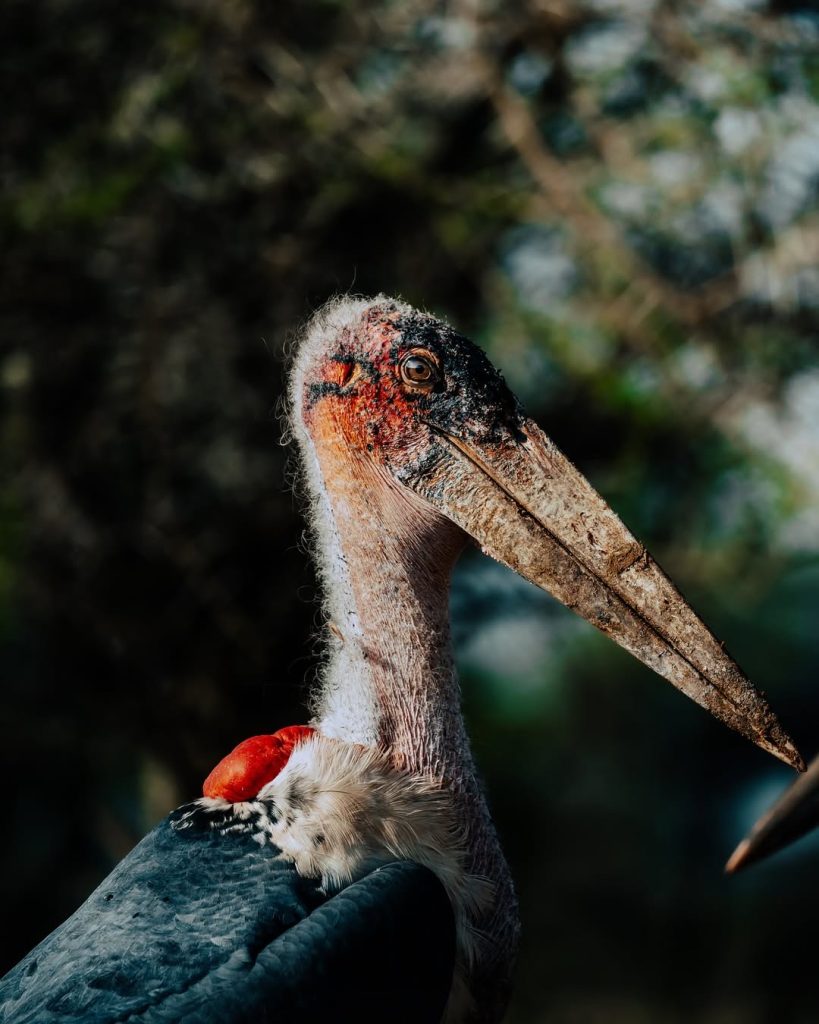
For travelers who move through the world with binoculars as a primary instrument, Loliondo represents a concentration of avian diversity that the national park’s more open terrain does not replicate.
The Maasai Dimension
Klein’s Camp’s position in the Loliondo concession is not incidental to the Maasai community that owns and manages the land — it is defined by it. Seventy-eight percent of the camp’s staff come from the nearby villages of Ololosokwan.
The organic vegetable garden that supplies the kitchen is a direct expression of the land’s agricultural tradition. The partnership with the Africa Foundation has produced sustainable funding for the Ololosokwan primary school and community health infrastructure.
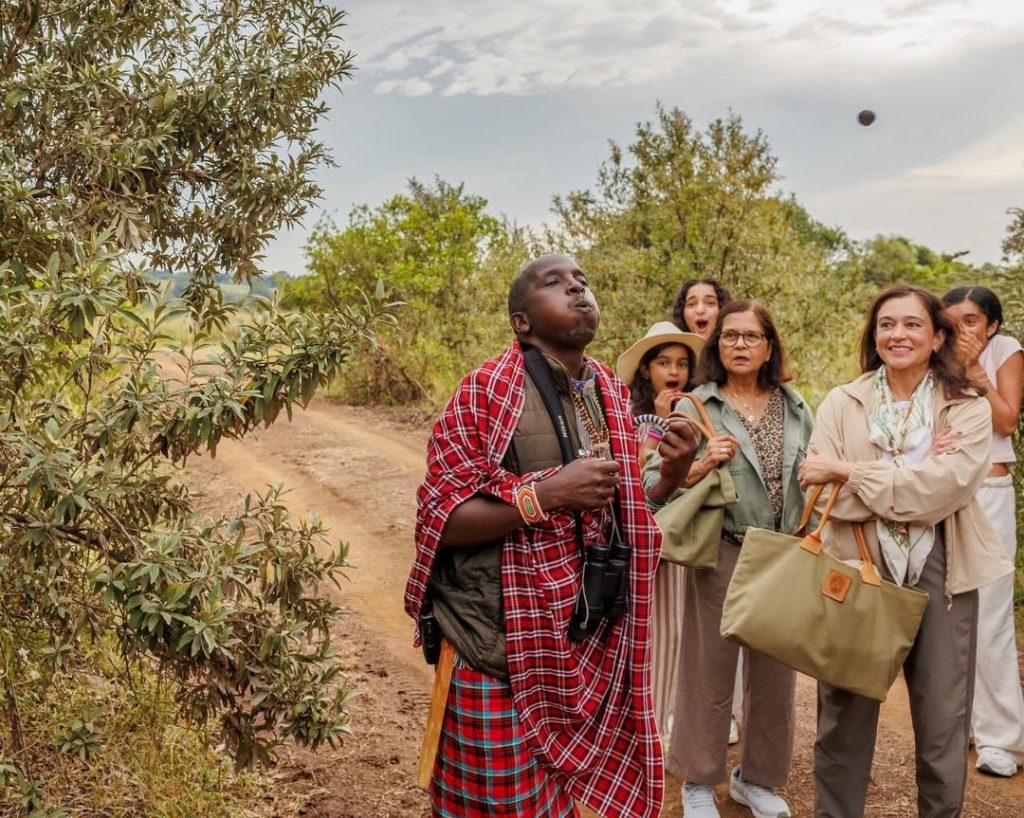
The Maasai village of Ololosokwan is not a curated cultural performance. It is a working community that receives camp guests on its own terms, with the authenticity that only genuine, non-commercial engagement produces.
Research in the psychology of meaningful travel has consistently found that encounters with communities living in substantive relationship with the natural environment they inhabit produce a quality of perspective-shift that wildlife encounters alone do not.
The Maasai at Ololosokwan have inhabited this landscape for generations and understand it with an intimacy that no guide manual records. An hour in their company is an education that changes the way the rest of the safari is experienced.
Non-Child-Friendly Environment
At Andbeyond Klein’s Camp, children are welcome with open arms as long as they are over 12 years old. We recommend this Camp for mature adults as it does not offer child facilities due to dangerous wild animals sometimes passing through it.
The Camp Itself
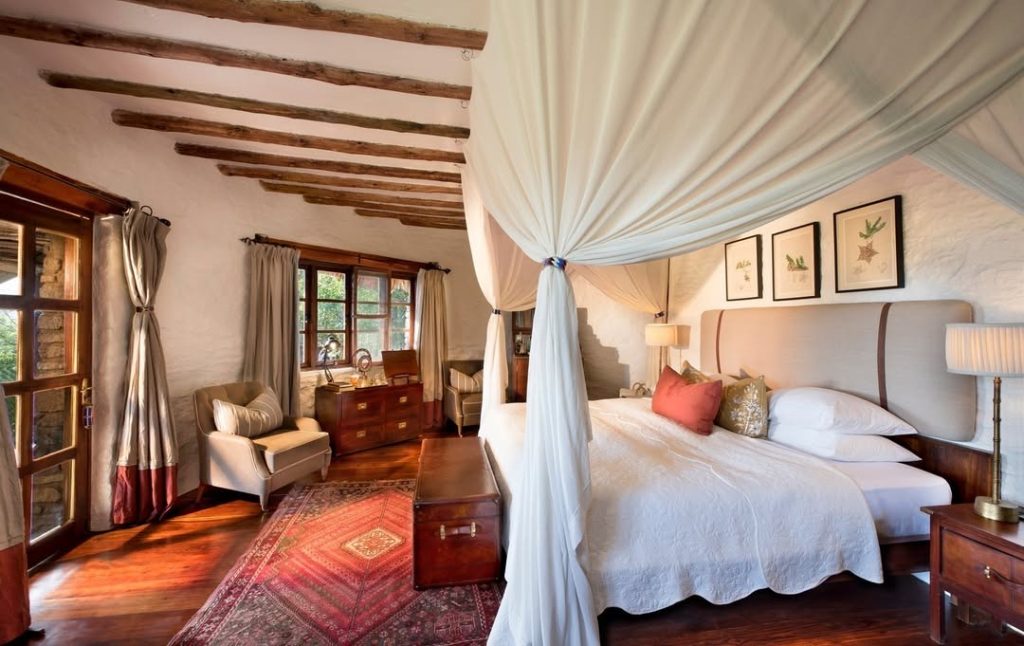
Twelve rooms. Stone interiors that open to panoramic views of the distant hills. Open fireplaces for the cold highland nights. A kidney-shaped pool set against the escarpment. A bar built around leather, stone, and the specific quality of unhurried time.
A Safari Shop where Maasai craft work is sold in direct partnership with the artisans who produced it. The scale is deliberate: Klein’s was never designed to be a camp that could accommodate everyone.
It was designed to accommodate the particular kind of traveller who understands that the size of the audience changes the nature of what is witnessed.
Children over twelve are welcomed. The camp’s environment, with wild animals moving freely through unfenced terrain, is genuinely not suitable for younger guests — a fact that Klein’s communicates with the same directness it brings to every other aspect of its operation. This is not a limitation. It is a design principle.
GET IN TOUCH WITH OUR EXPERT